How to Distribute a Blog Post: 10 Channels Beyond Google
How to distribute a blog post on 10 channels beyond Google: newsletter, sales team, customers, LinkedIn and more, plus a 5-day routine for SMBs.

You publish the post on Tuesday morning. By Friday you check the numbers: a handful of visits, mostly you and the colleague who proofread it. The writing is good, the research holds up, the headline works. Nobody put it in front of the people who had a reason to read it.
Distributing a blog post is the job that starts when you hit “publish,” and for a small business it matters as much as the writing. A new post takes a while to rank in organic search. The channels you already own get to work on day one. Below are 10 channels ranked by effort, plus a 5-day routine you can copy so no post of yours dies in silence again. The step before this one is strategic blog posting for small businesses, which turns publishing into a habit you can keep up.
Distribution, the forgotten multiplier

Writing the post gets you halfway. The other half is getting it out there, and that half rarely makes it into the plan. According to Parse.ly, an analytics company that tracks thousands of publishing sites, search engines and social media combined drive only 50% of the traffic to articles 1. Put everything on Google and a couple of Instagram posts and you’ve ignored half the roads that lead readers to your work.
What blog post distribution means. In the days right after you publish, you adapt the post and take it to the places your audience already spends time: your newsletter, your sales team, your current customers, social media, communities and trade publications. A post rewritten for the right channel reaches people Google wouldn’t send you for months.
The principle is simple. Chasing the biggest possible audience pays off less than serving the people who already know and trust you. The same goes for distributing a single post. Your first useful readers are the ones already within reach. Strangers from search come later.
Here are the 10 channels, from least to most effort.
| # | Channel | B2B/B2C | Effort | Time to first result |
|---|---|---|---|---|
| 1 | Newsletter | both | low | hours |
| 2 | Sales team | B2B | low | hours |
| 3 | Current customers | both | low | 1-2 days |
| 4 | B2B | medium | 1-3 days | |
| 5 | Instagram / Reels | B2C | medium | 1-3 days |
| 6 | YouTube Shorts | both | medium | days |
| 7 | Niche communities | B2B | medium | days |
| 8 | Digital PR and trade publications | both | high | weeks |
| 9 | Quoting experts | both | medium | days |
| 10 | Partnerships and co-marketing | both | high | weeks |
Distribution and measurement are separate jobs. Working out which readers actually matter and which channels bring in useful leads is a different topic: how to measure your blog’s results.
1-3. Owned channels (newsletter, sales, customers)
The first three channels belong to you. No algorithm decides who sees them, you don’t pay to reach anyone, and they respond within hours. For a small business they’re the obvious place to start, and the one most often skipped.
1. Your newsletter
The classic mistake is emailing a summary of the post. The reader sees a wall of text, realizes it’s homework and hits archive. Try this instead: pick one idea from the post, the most uncomfortable or the most useful, explain it in four lines and close with a single link.
Rewrite the subject line for the inbox. Don’t reuse the headline you wrote for Google. An SEO title like “How to Distribute a Blog Post: 10 Channels Beyond Google” falls flat in an inbox. “Is your team the only one reading your blog?” gets more opens because it names the reader’s problem. One idea per email, one link, a subject line written to be opened.
2. Your sales team
For a B2B company this channel sits right there, and it often goes completely unused. A solid post almost always answers an objection your salespeople hear over and over. Turn it into a written answer.
Picture a heating systems installer that keeps hearing “why are you more expensive than the other quote?” The salesperson can answer on the phone, or wrap up the call with a short email and a post that shows, with real numbers, how much maintenance affects the life of a system. The same post gets attached to the quote and sent as a follow-up after the meeting.
Set up a shared sheet between marketing and sales with two columns: the post, and the objection it handles. Every time you publish, add a row. Your sales team always has the right piece ready to send.
3. Your current customers
Paying customers aren’t the same as general newsletter subscribers. They’ve bought from you, they trust you, they open your emails. A useful post that arrives from their account manager, inside a support message or during onboarding builds the relationship without asking for anything. Give value first and the relationship holds up better when you do ask.
With AI. Paste the post into an assistant like ChatGPT or Claude and use this prompt: “Here’s my article [paste the text]. Write 3 versions of an email, 80 words max, that a salesperson can send to a customer who raised this objection: [write the objection]. Direct tone, no empty pleasantries, one link at the end.” Two minutes later your salesperson has three drafts to pick from, instead of one email dashed off in a hurry.
These three channels get powerful once they’re part of your publishing process and stop depending on someone’s memory. Promoting blog posts in a repeatable way belongs to the same discipline that keeps your editorial calendar running.
4-6. Social channels (LinkedIn, Instagram, YouTube Shorts)
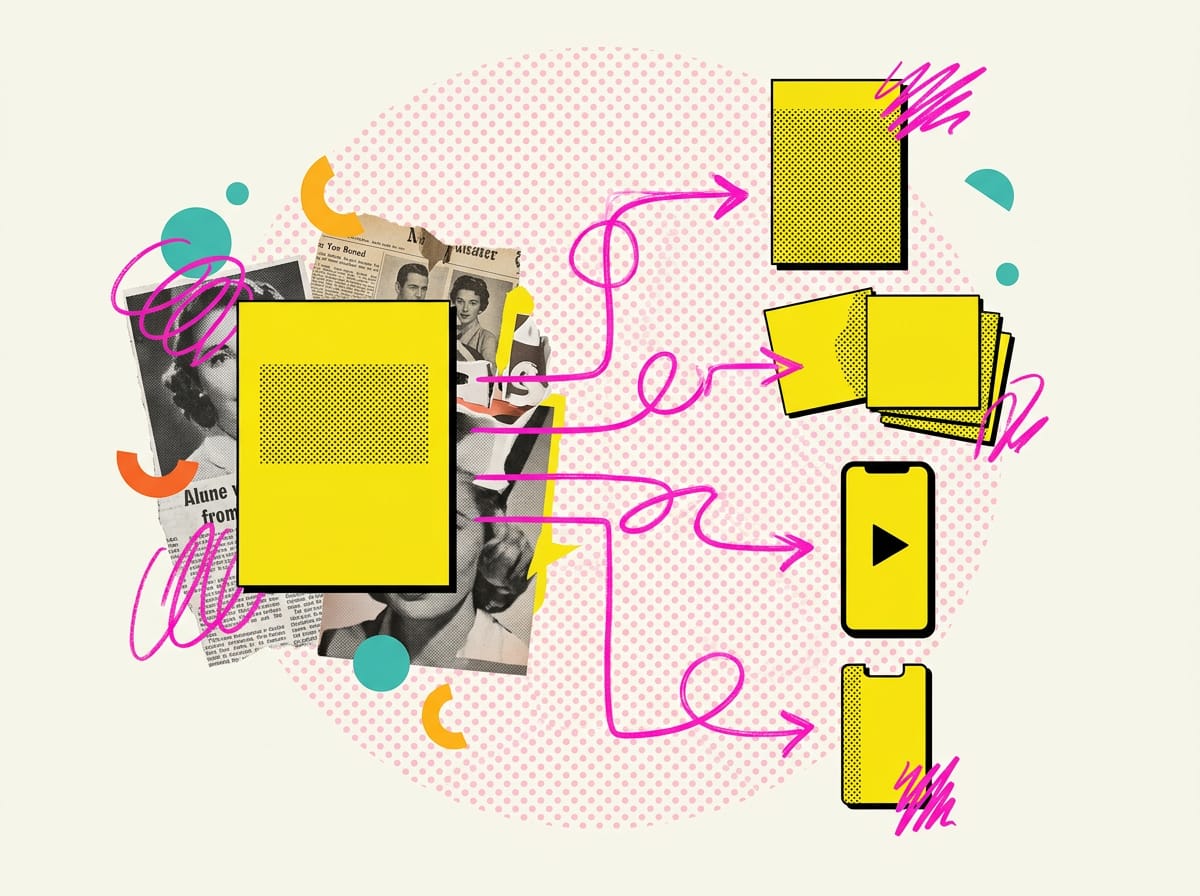
A bare link does almost nothing on social, because people scrolling won’t click on a headline and a URL. You have to rewrite the content so it lives inside the platform. Which platform depends on your audience. A B2B company lives on LinkedIn; a local consumer brand gets more out of Instagram. Italy’s Chambers of Commerce put it plainly: pick your digital channels based on your audience and goals, and ignore whatever’s trendy 2.
4. LinkedIn (for B2B)
Don’t just share the link. Take the post’s core idea and write it as a native text post, 150-200 words, with the link in the first comment rather than the body. For more structured pieces, a carousel works well: four or five slides that break the post down step by step.
Whose account it comes from matters too. A post from the owner’s personal profile lands differently than one from the company page, because people follow people. If you’re the founder, your profile is a distribution channel you’ve probably left switched off.
5. Instagram and Reels (for B2C)
If you sell to consumers, Instagram reaches people you won’t find on LinkedIn. Turn the post into a carousel with one stat or tip per slide, or a Reel where you look into the camera and explain the main point in 30 seconds. The link goes in your bio or in a Story with the link sticker. The aim is to bring people who want more over to your site. Nobody’s going to read a full article inside Instagram.
6. YouTube Shorts and short-form video
A 1,500-word post gives you at least three one-minute vertical videos. Take the three strongest points, film yourself explaining them on your phone, add captions. The same clips work as Reels and TikToks without reshooting anything. This format wins back the people who skip long text but will happily watch a minute of video.
With AI. To squeeze one post into several social formats, try: “Here’s my article [paste]. Pull out the 3 strongest ideas. For each one, write a LinkedIn opening hook, a 45-second script for a vertical video spoken in first person, and 3 lines for carousel slides. Plain, direct English, no motivational fluff.” That’s a week of posts from a single article.
7-9. Communities, PR and the power of quotes
Now you leave your own channels and step into other people’s spaces. The payoff is bigger because you reach new, qualified people. You also have to play by the rules, since the line between sharing and spamming is thin.
7. Niche communities
Industry LinkedIn groups, professional Slack or Discord servers, trade forums, associations. Your exact audience gathers in these places. To avoid getting kicked out, follow one rule: take part for weeks before you post a link of your own, and when you do, frame the post as the answer to a real question someone asked. “Following up on yesterday’s question about delivery times, I wrote about it here” works. A link dropped in cold doesn’t.
8. Digital PR and trade publications
A mention or a guest post in a trade magazine brings qualified readers and a link Google values. A small business doesn’t need a PR agency for this. Offer an editor a data point of your own, a concrete case, or an angle they don’t have. It takes weeks to see results, but they last.
9. Quoting experts
Few people use this one. When you write the post, quote two or three well-known people in your industry by name, with something they actually said and a link to their profile. Once it’s live, send each of them a one-line note. People who are quoted well tend to share, because they’re flattered and it gets them exposure. You’ve turned a source into a distributor.
10. Partnerships and co-marketing
The tenth channel is a deal with a non-competing business that talks to the same audience. An accounting firm and a business software vendor serve the same small companies without stepping on each other’s toes. You trade a newsletter mention, a guest post each, a link to each other. Every partner opens up a list you earned once and keeps paying off.
The 5-day routine so nothing slips
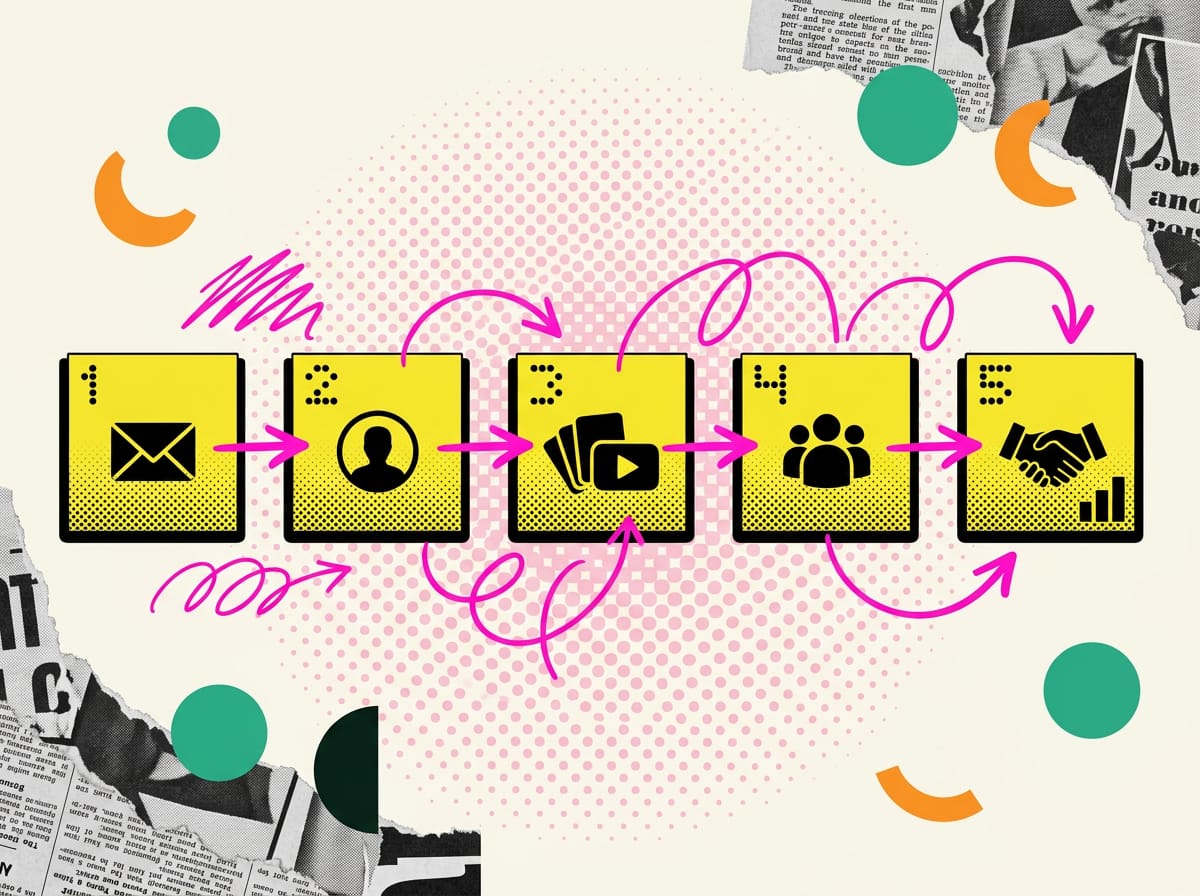
A list of channels won’t help much if, the day after publishing, you get pulled back into day-to-day work and the post just sits there. Without a written sequence, distribution slides to the bottom of the to-do list. Here’s one to drop into your editorial calendar.
- Day 1 (Tuesday, publish day). Send the newsletter with one idea and one link. Tell the sales team the post is live and update the “post → objection” sheet.
- Day 2 (Wednesday). Publish the native LinkedIn post from the owner’s profile, link in the first comment. Email the two experts you quoted.
- Day 3 (Thursday). Post the carousel or Reel on whichever platform your audience uses. Record a Short on the main point.
- Day 4 (Friday). Share the post in a niche community as a reply to an open discussion, never cold.
- Day 5 (the following Monday). Your salesperson sends the post to the current customers who genuinely need it. Check the first visits by channel and note what worked.
Five days, none of them taking more than twenty minutes. The same post reaches your audience six or seven times from different angles, so you’re not left waiting on a Google ranking that may or may not show up down the line.
Before you distribute, though, the post has to be worth the click. A piece that draws traffic but isn’t optimized wastes every channel you push it through, so run it against your publishing checklist. Research on small business e-commerce lands on the same point: you can drive as many visitors as you like, but if the page doesn’t convert, the extra traffic won’t turn into results 3. Getting the reader to the post is step one. Giving them a reason to stay and a clear next step is what turns a visit into a lead.
Sources
Footnotes
-
Chart: Not Just Search & Social – How Readers Find Articles - Statista. statista.com ↩
-
Quali sono i canali di comunicazione più adatti per … sni.unioncamere.it ↩
-
The determinants of conversion rates in SME e-commerce websites. eprints.bournemouth.ac.uk ↩
FAQ
Why does a blog post get so few visits after it's published?
Because publishing is only half the job. Google can take days or weeks to index and rank a new post, and without active distribution the article stays invisible. You have to take it to the channels where your audience already is.
What are the best channels to start distributing a blog post?
Your three owned channels: newsletter, sales team and active customers. You already own them, no algorithm decides who sees them, you don't pay to reach them and they respond within hours. For a small business they're the most effective place to start.
Is SEO enough to bring readers to a blog post?
No. According to Parse.ly data, search engines and social media combined drive only 50% of traffic to articles. The other half comes from editorial and recirculation traffic, so relying on Google alone means ignoring half the possible routes.
How long does it take to see results from content distribution?
It depends on the channel. Owned channels like your newsletter, sales team and customers deliver results within hours or 1-2 days. Social media and niche communities take 1-3 days, while digital PR and partnerships take weeks.
Which distribution channels work best for B2B vs B2C?
For B2B, your sales team, LinkedIn and niche communities are the most effective. For B2C, Instagram and Reels matter more. Newsletters, active customers, YouTube Shorts, digital PR, expert quotes and partnerships work for both.
What's the difference between distributing and measuring a blog post?
Distributing means getting the article in front of readers on the right channels. Measuring is about which readers are actually worth something and which channels bring in useful leads. They're two separate jobs: distribute first, then analyze the results.