Best Commercials Ever: What Small Businesses Can Learn From Them
The best commercials (Apple, Dove, John Lewis) and what a small business can actually copy on a tight budget, starting from the story, not the camera.

“Advertising films” can mean two things. The first is the ads a company shoots to sell something. The second is feature films about the ad industry. This guide covers only the first: videos made by brands. It has one obsession. Which parts of those expensive films can you actually copy on a small-business budget, and which parts are folklore that only matters if you have millions to burn?
Most business owners I talk to have already made a company video. Epic music, drone footage, the founder striding across the factory floor. It cost a few thousand euros and didn’t bring in a single lead. The camera was rarely to blame. There was no story, and without a story an advertising film is just a brochure that moves.
What is an advertising film?
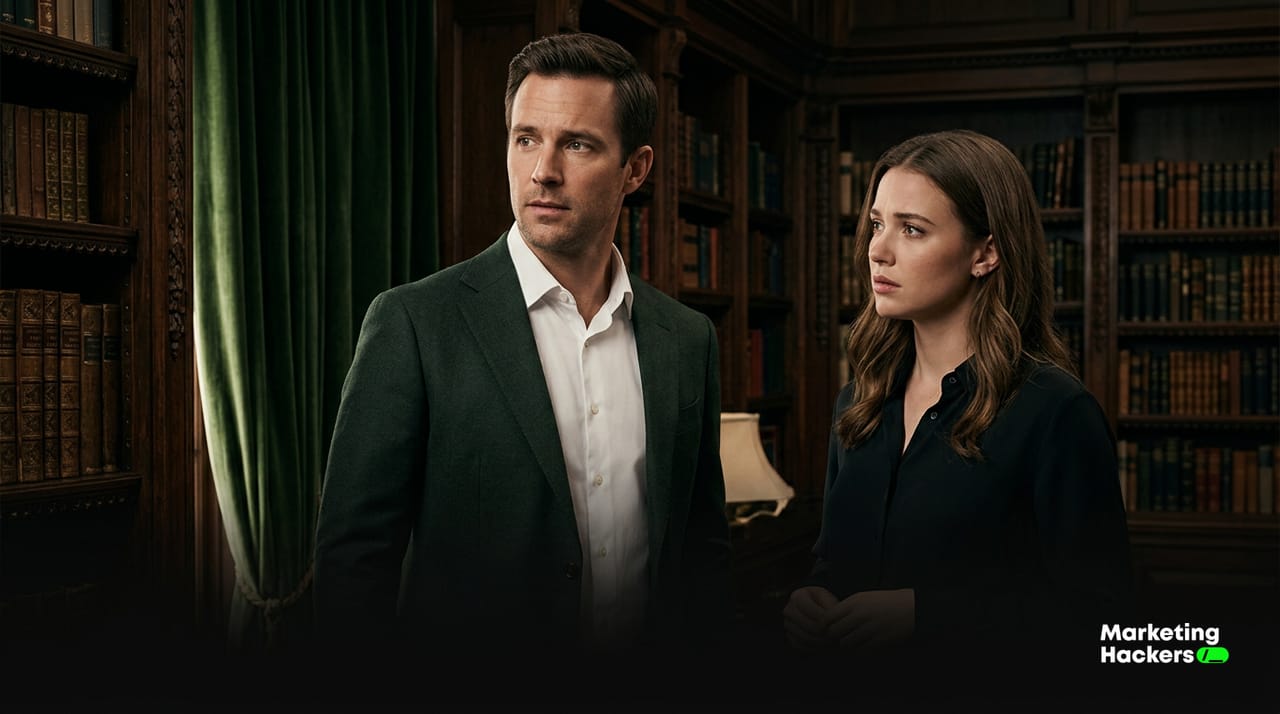
An advertising film is a video that borrows the grammar of cinema (characters, conflict, a plot that unfolds over time) to deliver a commercial message. When it runs longer than a standard spot, academic research has a specific name for it: the mini-film, defined as a recent branded-entertainment format born on the web 1.
Three things often get lumped together, and it pays to pull them apart. A spot is the short 15-30 second format built to interrupt. An advertising film, or mini-film, runs longer and tells a real story. Branded content entertains or informs without asking for anything right away. Each tool has a different job, and mixing them up is why so many small-business videos flop. Companies shoot a mini-film, then judge it like a direct-response ad.
So why does story sell? Researchers who studied real mini-films found that narrative transportation, the feeling of being pulled into the story, strongly shapes how viewers feel about the film. That feeling then carries over to how they see the brand and whether they intend to buy 2.
Nine advertising films worth studying

Plenty of ads have won more awards. I picked these nine because each one isolates a mechanism you can steal.
Apple, “1984”. A grey hall full of identical people, and an athlete who sprints in and hurls a hammer at the screen. The product appears for a few seconds. The lesson: an advertising film can sell a sense of belonging before it sells a product. For a small business, that means asking which enemy your customers share, and standing on their side.
Dove, “Real Beauty”. A woman describes her face to a sketch artist who can’t see her. Then a stranger describes her, and the two portraits don’t match. Nobody shouts the brand name. It works because you identify with the character and what happens to her, which research on film techniques in advertising names as the mechanism that makes storytelling persuasive 3.
John Lewis, the Christmas ads. Every year a character, often not a human one, moves through a small story of waiting and wanting. The product barely shows up. It’s the purest example of storytelling that builds a brand over years instead of pushing an immediate sale.
Mulino Bianco. The Italian bakery brand’s kitchen, the morning light, the family. Repeated, unchanged, for years. The value comes from consistency: the same world, the same music, the same warm tone, repeated until people recognise it from the first frame.
Barilla. The dinner table, coming home, family ties as a fixed frame. Like Mulino Bianco, it shows that a strong advertising film is one brick in a story that lasts for years.
Nike. An anonymous athlete training in the dark, the finish line, the grind. The product is a detail on their feet. The story always follows the same shape: obstacle, effort, breakthrough. It works at any scale, because every company has a customer who got past an obstacle with its help.
Coca-Cola, the holiday ads. The lit-up truck, the snow, a yearly ritual coming back around. It teaches the power of recurrence. A film that returns every year builds anticipation, and over time anticipation is cheaper than buying attention from scratch every time.
Dollar Shave Club. The founder talking to camera, walking through a warehouse, in a single take shot on a shoestring. No effects. Just a direct tone and a clear promise. For a small business it’s the most useful film on this list, because it proves that the idea and the pacing beat an expensive production.
Old Spice, “The Man Your Man Could Smell Like”. A man talks to camera while the set behind him keeps changing with no visible cuts. The constant surprises keep you glued. There’s measured evidence behind this. An experiment with 306 people compared ads with a plot twist against ads without one, and found the twist ads produced more surprise, and that surprise improved attitudes toward the ad and willingness to act 4.
The transferability grid: what to copy on the budget you have
You watch the Apple ad and assume you’d need a studio budget. That’s wrong for the part that matters. What you’re paying for in those films is production, and production is the part that transfers least and decides least. The part you can transfer is the narrative mechanism, and you pay for that in ideas.
Research on narrative communication offers a practical way to decide what to copy. It credits stories with four distinct powers: they get past audience resistance, make information easier to process, offer stand-in social connections through characters, and deal with emotional issues 5. Take your next video and ask which of the four levers it pulls. If the answer is none, you’re shooting an animated brochure.
One detail flips your spending priorities. When a story transports viewers, they lower their guard and come up with fewer counterarguments in their heads, and that drop in resistance feeds directly into persuasive impact 1. Put simply, a customer absorbed in a good story stops looking for reasons to say no. You get there with a real conflict told well. No drone shot will do it for you.
The working rule: from the film you admire, copy the narrative structure and the tone. Forget the production scale. A founder honestly describing a customer’s problem, shot on a smartphone in good light, beats a glossy video with no story.
Distinctive brand assets
Why can you spot a Mulino Bianco ad without seeing the logo? Because certain elements repeat over time: the same music, the same palette, the same world. These are distinctive brand assets, and they’re why recurrence works for Coca-Cola and John Lewis while your one-off video evaporates.
For a small business this is the best news in the whole brief, because a distinctive asset is cheap and it compounds. Pick one element and repeat it in every video for years: the same voiceover, a colour, a closing gesture, an opening format. Consistency makes up for budget. Research on historical films used as advertising makes exactly this point: pairing the storytelling formula of film with an advertising purpose strengthens the message’s ability to capture and hold attention 3.
When an advertising film isn’t worth making
Not everyone should make one. If you don’t have a clear offer, if you don’t have a defined audience, if your only goal is to sell something within thirty days, a narrative mini-film is the wrong tool. Advertising films build a brand over time, and their effect travels through attitude toward the video, which carries over to the brand and only then to purchase intent 2. That’s a long chain.
There’s a practical threshold. If you can’t afford to keep the film running for at least six months across several channels, and you have nothing repeatable to build on top of it, that money will work harder in direct-response campaigns. Advertising films reward patience and a story you can keep telling.
How to measure an advertising film
The average company video gets written off after three weeks because it’s judged on the wrong KPIs. A narrative film doesn’t behave like a direct-response ad, so tracking immediate sales is like weighing water with a ruler.
Measure on two timelines. In the short term, look at how people respond to the film itself: how many watch it to the end, how many share it, what the comments say. In the research, this is the metric that links everything else, because attitude toward the mini-film is what carries over to the brand and eventually to purchase intent 2. In the medium term, look at brand signals: searches for your name, direct enquiries, cold-outreach reply rates that climb over the following months. The persuasive effects of narrative held up regardless of how involved people were with the product or how they felt about advertising beforehand 1, which suggests a well-built story also works on people who don’t know you yet.
How AI speeds up production without replacing the process
AI speeds up the mechanical work around your story once you’ve decided on the conflict and the character. The story itself stays your job. Order matters: process first, tool second.
Use it to draft the structure. Here’s a prompt to paste into ChatGPT or Claude:
You’re an advertising screenwriter. My company [describe in one line what you do and for whom]. My typical customer has this concrete problem: [problem]. Write three structures for a 60-90 second mini-film based on the obstacle-effort-breakthrough pattern, with the customer as the main character instead of the company. For each one, specify the opening scene, the turning point, the ending, and the moment the product appears. No slogans, no promotional adjectives.
Treat the three structures as raw material. Pick one and rewrite it by hand using your customers’ actual words. For the plot twist, whose effect on surprise and attitude toward the ad has been measured 4, ask the tool for three endings that overturn the expectation set up in the first half.
For storyboarding and pre-production, tools like Runway or Google Veo generate rough visuals of each scene before you book a crew and locations, so you arrive on set with a clear reference and shoot less. For cutting short versions to post on social, Descript edits from the transcript and lets you turn out, in an hour, the ten short cuts that keep your distinctive brand asset working over time. The tool saves you hours. You decide the story.
How long should an advertising film be?
It depends on the goal. For direct response and social, short 15-30 second formats still work. To build a brand and trigger narrative transportation you need more room, and that’s mini-film territory, the branded-entertainment format researchers have studied precisely for how it works through story 1.
Does an advertising film work for a small business?
Yes, as long as you copy the mechanism and forget the production scale. The founder-in-the-warehouse case shows that a direct story shot on a small budget can convert better than a glossy video. The four powers of narrative (getting past resistance, aiding understanding, creating connection, reaching emotions) don’t depend on budget 5.
Do I need an actor, or can I appear myself?
You can appear yourself, and it’s often better. What makes the story persuasive is identification with the character and what happens to them 3. A genuine founder living through a real problem creates more identification than a polished, distant actor.
Sources
Footnotes
-
THE EFFECT OF NARRATIVE TRANSPORTATION IN MINI-FILM ADVERTISING ON REDUCING COUNTERARGUING. academic-pub.org ↩ ↩2 ↩3 ↩4
-
The persuasive effectiveness of mini‐films: Narrative transportation and fantasy proneness. doi.org ↩ ↩2 ↩3
-
Persuasion or Story? Historical Spots Bridging Film and Advertising. doi.org ↩ ↩2 ↩3
-
Exploring the Narrative Persuasion on the Story Plot : Focusing on the Plot-twist Advertising. doi.org ↩ ↩2
-
Narrative communication in cancer prevention and control: A framework to guide research and application. academic.oup.com ↩ ↩2
FAQ
What's the difference between a TV spot, a brand film and branded content?
A spot is the short 15–30 second format built to interrupt. A brand film, or short film ad, runs longer and tells a real story. Branded content entertains or informs without asking for anything right away. They serve different goals, and mixing them up is why so many small business videos fall flat.
Why didn't my company video bring in any leads?
The camera or the production quality is rarely the problem. Most of the time there was no story: without characters and conflict, a brand film is just a brochure that moves. A big, epic look on its own won't make the phone ring.
Can a small business replicate famous commercials like Apple's or Dove's?
Not the budget, but the mechanism, yes. Apple's "1984" teaches you to name the enemy your customers share and take their side. Dove teaches you to make viewers see themselves in a character. Both are storytelling levers you can use with very few resources.
Why does a story sell better than a list of features?
Because narrative transportation, being absorbed into the story, strongly shapes how people feel about the film. That feeling then carries over to the brand and to purchase intent. It's why short film ads outperform purely informational messages.
What can a small business learn from long-running brand campaigns like Mulino Bianco's?
That a brand film builds value through repetition. Italian bakery brand Mulino Bianco has kept the same world, the same music and the same warm tone for years, and people recognize it instantly. For a small business, that means sticking with one recognizable identity instead of changing tone with every video.