How to Persuade Clients: A 5-Step Framework for Sales Conversations
How to persuade clients without pushing: a 5-step sequence (discovery, problem, context, solution, next step) with call scripts and AI prompts.

The owner of a consultancy opens the call, shares their screen and talks about the service for twenty-five minutes. Slides, case studies, price list. At the end the prospect nods, says “interesting, we’ll think about it,” and stops answering emails. The same scene plays out in thousands of sales conversations every week, and price is almost never the problem.
Persuasive client communication is a sequence you can run on every call. Each step sets up the next one, and the client reaches the decision in their own head. Persuasion research has been saying this for a long time. In everyday life, people resist attempts to convince them far more often than they go along with them, and they resist hardest when they suspect someone is playing them.1 The method below is built to get the opposite reaction: the client reaches the conclusion you need without being pushed there.
This article is part of our series on the psychology of professional communication. Here we focus on the sales conversation itself, with a dialogue script and a ready-to-use AI prompt for each stage.
The 5 steps at a glance:
- Discovery. Get the client talking about their business with high-value open questions.
- Problem. Play back what they said so they feel understood.
- Context. Anchor your value to their business by putting a number on what the problem costs.
- Solution. Present your offer with the right framing for that client.
- Next step. Close with a small, concrete commitment that has a date on it.
Where persuasion ends and manipulation begins
The line is clear. Persuasion helps the client see a real problem they already have and weigh a solution that fits them. Manipulation exploits a mental shortcut to get a yes the client wouldn’t give if they had all the facts.
That line has practical consequences as well as ethical ones. Research on resistance to persuasion describes four broad families of defenses people put up when someone tries to convince them, and links them to three underlying motives: the feeling that their freedom is under threat, reluctance to change, and the fear of being deceived.1 Once a client smells a con, they put up the hardest wall of all, the one built on suspicion. From then on every technique you use looks like a move, and the deal is dead even if they’re still on the call.
Marketing research gets to the same place from another direction. A review published in the Italian Journal of Marketing notes that people who understand the principles of persuasion write messages that are more likely to get a positive response, provided the communication starts from the person’s actual attitudes.2 For a small business, that means you win clients over by working on the problem they really have. Try to pin a need on them they don’t have and the resistance kicks in straight away.
Keep a three-question test for the end of every call. Is the client objectively better off if they say yes? Would you use exactly the same words if they could read your internal notes? Are you willing to accept “no” as a legitimate outcome? Three yeses and you’re persuading. Hesitate on any one of them and you’re starting to manipulate. The same mechanisms are at work when you use Cialdini’s principles ethically in sales, which we cover separately.
Step 1. Discovery: open questions that get the client talking
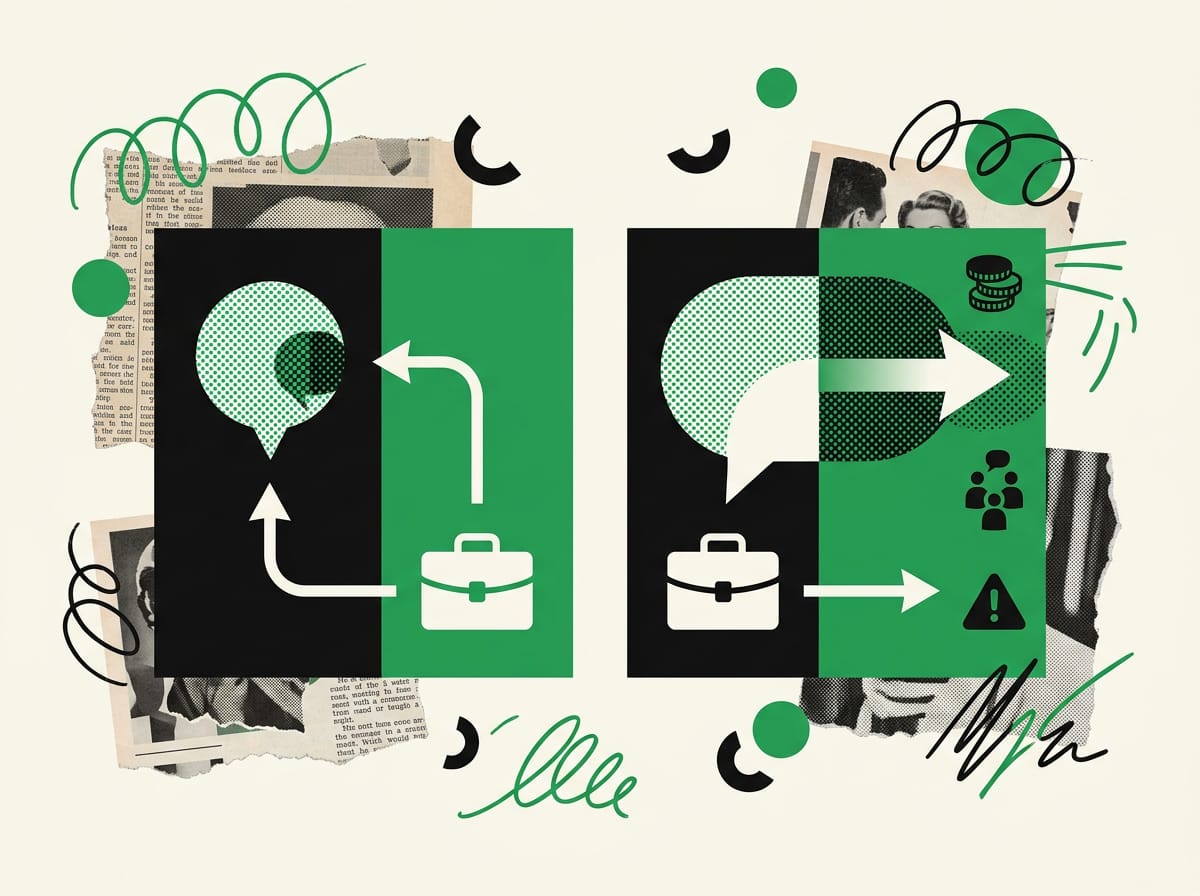
A high-value question does one thing. It gets the client talking about their business, and your product stays out of it. “Do you need a new website?” is a weak question: it invites a yes or a no and puts the spotlight straight back on you. “Where do the clients you actually close come from today?” gets them talking, because it makes them look at their own numbers while you listen.
The working rule sounds blunt, but it works. At this stage the client should talk more than you do. If you’re explaining, you’re not doing discovery. The best questions are open, stay inside the client’s world and lead toward the consequences of a problem. They never touch the features of what you sell.
Here are five pairs you can adapt to your industry.
| Weak question | High-value question |
|---|---|
| Do you need a new website? | Where do the clients you close come from today? What happens if that channel slows down? |
| Do you advertise online? | When a prospect searches for you, what do they find? Who reaches them before you do? |
| Are you happy with your leads? | Out of ten enquiries you get, how many turn into a quote and how many drop off before that? |
| Do you have a CRM? | When a lead doesn’t buy right away, who remembers them a month later? |
| Are you interested in SEO? | If you vanished from Google tomorrow, how much of your revenue would take the hit, and how fast? |
Notice that the right-hand column never names a service. It talks about risk, money and the people inside the client’s company. That’s where persuasive communication in consultative selling starts, long before you mention prices.
AI box. Prep your discovery. Before the call, give a language model the prompt below.
You’re a sales consultant experienced in B2B selling to small and mid-sized businesses. Below are the website and industry of a prospect. [paste URL + industry]. Prepare 8 discovery questions for me to ask on the call. Stick to three rules. No yes/no questions, no questions about my product or service, and every question must get the client talking about their business and the consequences of their problems, for example where their clients come from, what happens if a channel dries up, what a lost lead costs them. Order the questions from broadest to most specific.
Running the call is still your job. The tool means you walk in prepared, with questions written for this client rather than the usual script.
Step 2. Problem: give the client their own words back
Once the client has talked, the most underrated move is also the simplest. You play the problem back in their words, add the consequence they mentioned, and finish by asking them to confirm. “If I’ve got this right, most of your leads come through word of mouth right now, and when one of the partners is on vacation, enquiries drop by thirty percent. Is that right?”
That one playback does three jobs at once. The client feels genuinely heard. They get the chance to correct anything that’s off before it turns into an objection. And the conversation now centers on their problem, with your offer kept in the background. It’s active listening applied to sales, and in persuasive sales communication it does more than ten arguments for your product.
Here’s how it plays out in a real case: a twelve-person engineering firm asking for “more leads from the website.”
Before: the consultant jumps to the product.
Client: We’d like more leads from the website. Consultant: Great, we can rebuild your site with an optimized form and run a campaign. I’ll send you a quote.
After: the consultant plays it back.
Client: We’d like more leads from the website. Consultant: When you say more leads, do you mean more enquiries overall, or better-targeted ones? Client: Better-targeted. We get plenty, but half of them are people looking for things we don’t do. Consultant: So the real issue is the time you lose screening out the wrong enquiries, while the good projects might be slipping past you. Have I got that right? Client: Exactly. That’s it.
In the second version the client has just rewritten the brief, and felt understood while doing it. From here on they’ll defend the solution themselves, because it came out of their own words.
AI box. From call notes to playbacks. After the meeting, paste in your notes or the transcript and use this prompt.
These are notes from a sales call. [paste]. Pull out the 3 main problems the client mentioned, each with the concrete consequence they themselves described. Rephrase each one as a sentence I can read back to them for confirmation, in the format “If I’ve got this right, [problem], and it’s costing you [consequence]. Is that right?”. Use only what’s in the notes, and don’t add problems the client didn’t mention.
One more thing, and your company’s reputation depends on it. If you record the call to get a transcript, ask for consent before you hit record. The law requires it, and it’s the same ethical test we set out at the start.
Step 3. Context: anchor your value to the client’s business
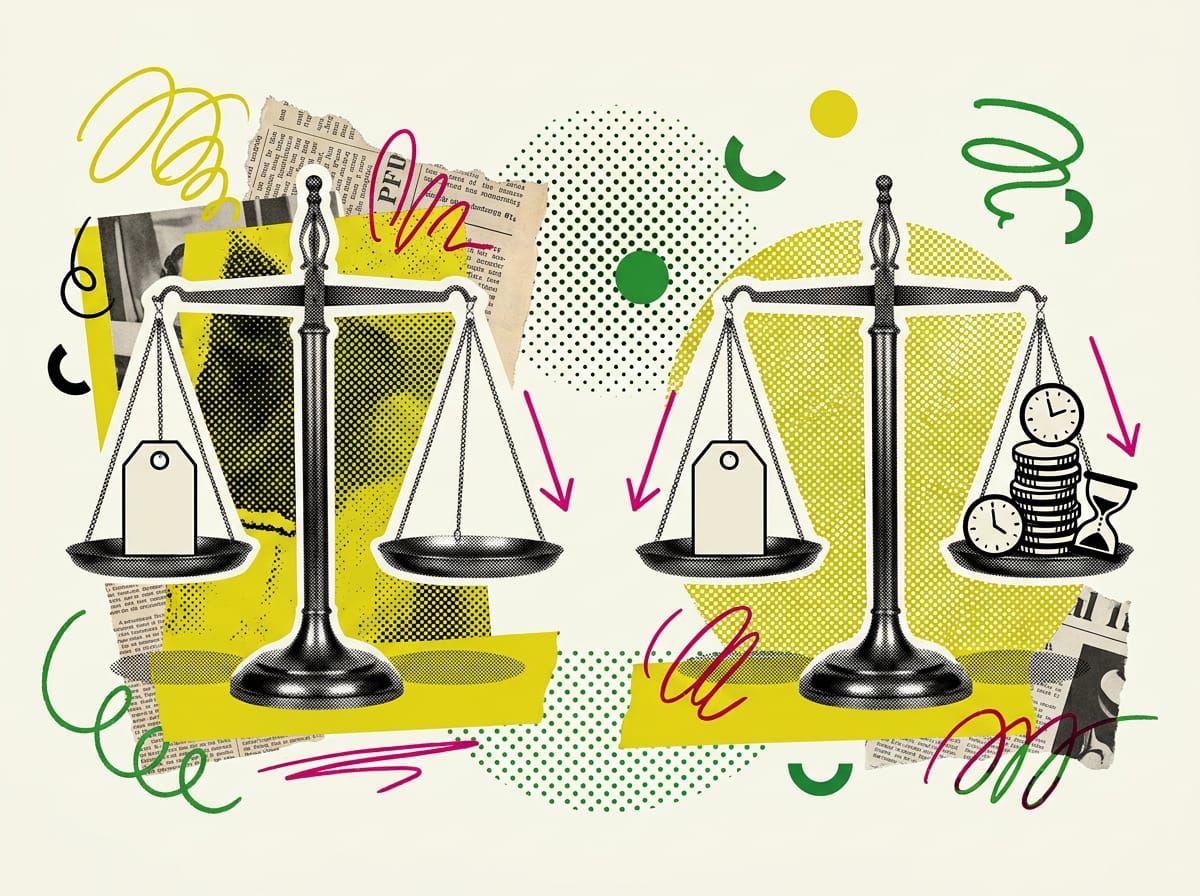
You and the client now agree on the problem. Next you need to show what it costs, in money, hours or lost clients. The engineering firm said half its enquiries miss the mark. Turn that into a number they own. “Say twenty enquiries come in a month and ten have to be thrown out. If each one takes half an hour to answer and assess, that’s five hours a month down the drain, plus the good projects sitting in the queue in the meantime. What’s an hour of your most senior partner worth to you?”
This is how you anchor your value proposition to the cost of the problem. You get the client to say what leaving it unsolved costs them, and your price hasn’t come up yet. They supply the figure, which is why they believe it. It’s what makes a quote feel like recovered margin instead of one more expense.
It works because it changes the comparison. With no number on the table, the client weighs your price against zero, meaning doing nothing, and zero always wins. With a number on the table, they weigh your price against the five hours a month they keep losing. The Italian Journal of Marketing review makes the same point: an effective persuasive message builds on the attitudes and judgments the person already holds about something.2 You hook your value onto a cost the client already recognizes as theirs, so you don’t have to invent one.
Watch out for a classic small-business mistake: inflating the estimate. Tell a client they’re losing a hundred thousand euros a year when they know it’s five thousand, and you’ve set off their fear of being deceived in one go, the hardest defense of all to bring down.1 A conservative figure the client confirms is worth more than a big one they tear apart.
Step 4. Solution: choose the right framing for this client
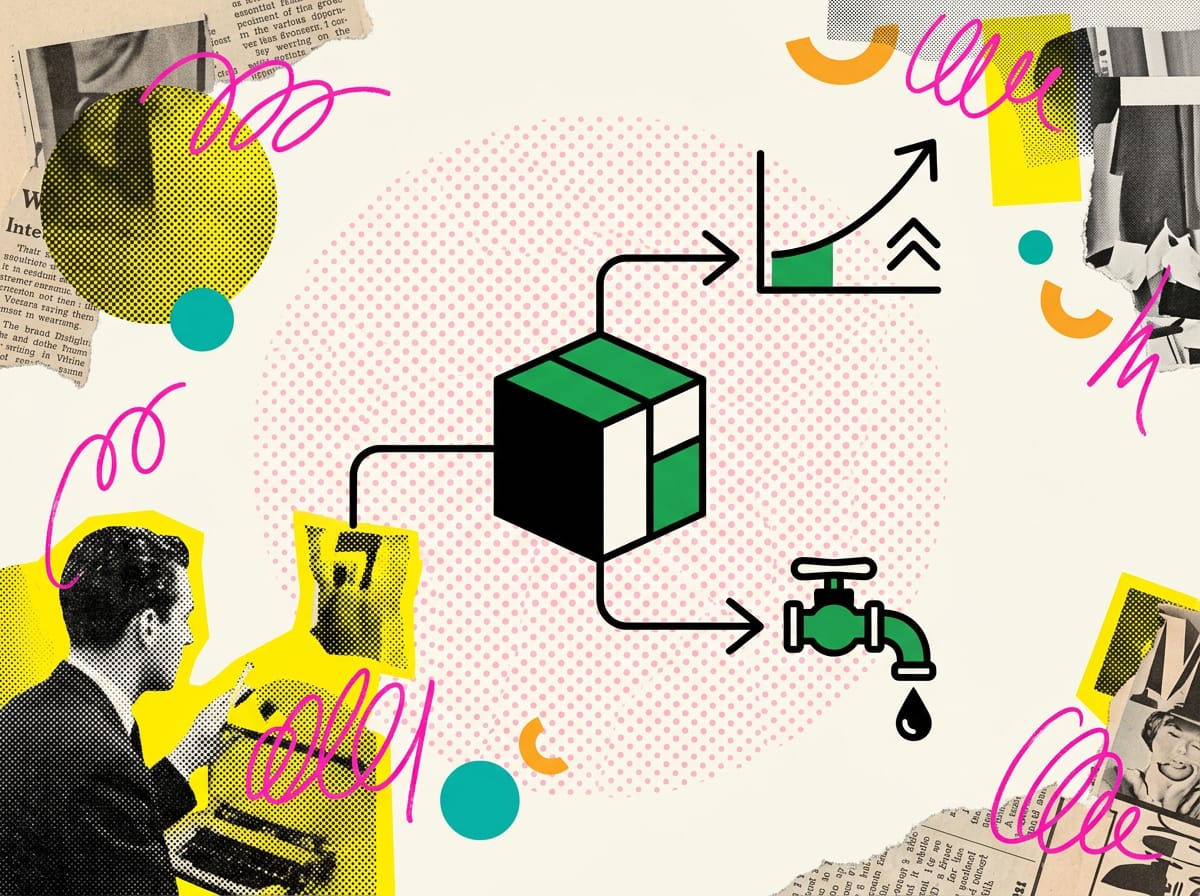
Only now do you present what you do, and how you say it matters as much as what you say. You can pitch the same solution as a gain (“with this filter on the site, enquiries arrive pre-qualified and your team gets back to the good projects”) or as a loss avoided (“you stop burning five hours a month and leaving good projects in the queue”). Same fact, two framings.
The choice follows a clear logic. Gain framing works better when the client is growing and thinks in terms of opportunity. Loss framing works best when the client is already stuck in a problem that hurts and wants to stop the bleeding. A practical rule: if you heard ambition during discovery, talk about gains. If you heard frustration, talk about what they’ll stop losing.
Persuasion techniques work best in combination. A synthesis of behavior change research analyzed 277 studies and mapped more than 2,600 links between 77 techniques and the psychological mechanisms they act on. Almost every technique works through several mechanisms at once, more than one on average.3 The lesson for a sales call is simple. Combine the number from step 3, the right framing, and proof that you can deliver, such as a case similar to theirs.
Timing matters when you show the solution. The demo or sample comes now, once the problem has a cost attached. Demoing too early is the most common mistake people make when selling services. You show the “how” before the client has felt the “why,” and the value evaporates. The same goes for discounts: offer one only if and when a real price objection comes up, never before.
Step 5. Next step: close with a concrete micro-commitment
The worst calls end with “thanks, we’ll think about it.” A good one ends with a small, concrete step and a date. Don’t try to get the big contract signed first time out. Ask for something within reach: a second call with the partner who makes the decision, the last six months of traffic data, a pilot in a single area. “Could we grab half an hour next week with your partner too? I’ll bring an estimate based on your actual numbers.”
This is a micro-commitment, and there’s solid evidence behind it. An experiment on how users respond to customer service chatbots found that the urge to stay consistent with a small first yes makes people more likely to agree to the next request, the same mechanism behind the “foot in the door” technique.4 A client who agrees to send you their data has already started acting like a client. The second yes comes more easily than the first.
The micro-commitment also works because it respects the client’s freedom, so their strongest defense, the one against feeling pushed, stays down.1 You’re asking for a low-risk step they can take without being pressured into a hundred-thousand-euro decision.
Give the follow-up the same care as the call. Within a few hours, send a short email that recaps the problem in their words, the estimate you agreed on and the next step with a date. This is where AI saves you time and you still sound like yourself.
AI box. The follow-up email. Use this prompt right after the call.
Write me a follow-up email after a B2B sales call. Here are my notes. [paste]. Structure it in three points. 1) one line restating the main problem in the client’s words; 2) the estimate of the problem’s cost that we agreed on during the call; 3) the next step with the proposed date. Direct, professional tone, no filler pleasantries, 120 words max, in English. Don’t promise results that aren’t in the notes.
The mistakes that sink deals in small businesses
Three mistakes come up more often than any others, and each one is a shortcut that skips a step.
The product monologue skips discovery. You talk for twenty-five minutes, the client gets twenty seconds, and then you wonder why they need to “think about it.” If you’re explaining before you’ve listened, you’ve already lost the thread.
The premature demo skips context. You show how the tool works before the problem has a price tag in euros, and the client judges the “how” with no “why” in mind. Even a brilliant demo ends up as a curiosity, and the client never feels they need it.
The early discount skips objection handling. You cut the price before the client has even pushed back, and that tells them two things: the price was padded, and waiting gets them more. From then on every negotiation starts from the discounted price.
All three mistakes break the order. The sequence only works if you run it step by step, because each step gets the client ready for the next. Skip one and persuasion turns into exactly the kind of pressure that triggers their defenses. If you also want to work on the nonverbal side of these stages, from your tone of voice to how you come across on camera, we cover it in our piece on nonverbal communication in sales.
Try the method on your next call. Prepare your eight discovery questions, talk less than you normally would, and at the end ask for one small yes. Then watch how much of the convincing the client does for you.
Further reading
Sources
Footnotes
-
Strategies and motives for resistance to persuasion: an integrative framework. frontiersin.org ↩ ↩2 ↩3 ↩4
-
Developing persuasive systems for marketing: the interplay of … link.springer.com ↩ ↩2
-
Behavior Change Techniques and Their Mechanisms of Action: A Synthesis of Links Described in Published Intervention Literature. academic.oup.com ↩
-
AI-based chatbots in customer service and their effects on user compliance. link.springer.com ↩
FAQ
What are the 5 steps of persuasive communication with clients?
The steps are discovery, problem, context, solution and next step. Get the client talking with open questions, restate what they said, quantify what the problem costs them, present your offer with the right framing, and close with a small, dated commitment. Each step sets up the next.
What's the difference between persuading and manipulating a client?
Persuasion helps clients see a real problem they already have and weigh a solution that fits them. Manipulation exploits a mental shortcut to get a yes they wouldn't give if they had all the facts. Once a client senses they're being played, their guard goes up and the deal is dead.
How do I know if I'm persuading or manipulating a client?
Run a three-question check after the call: is the client objectively better off if they say yes? Would you use the same words if they could read your internal notes? Would you accept a no as a legitimate outcome? Three yeses means you're persuading. Hesitate on any one and you're starting to steer them.
Why do people resist attempts to persuade them?
Persuasion research points to three underlying drivers: feeling that their freedom of choice is under threat, reluctance to change, and fear of being deceived. People push back hardest when they suspect they're being worked on, which is why it pays to start from their real problem.
Why do clients say "sounds interesting, we'll think about it" and then go silent?
Usually because the salesperson spent twenty-five minutes talking about their own service without surfacing the client's real problem. Price is rarely the actual obstacle. What's missing is a sequence that lets the client reach the conclusion on their own, instead of feeling pushed.