Workplace Conflict Resolution for Small Businesses: A Mediation Guide
How to handle workplace conflict in a small business: tell healthy disputes from toxic ones, pick one of five styles, and know when to call a mediator.

Your head of sales and your head of marketing haven’t spoken in two weeks. A campaign flopped, each blames the other, and you, the person who started the company, are waiting for it to blow over. It won’t. In a business of ten, twenty or thirty people, handling conflict almost always lands on the owner, because there’s no HR department to step in and referee.
This guide gives you a practical protocol for handling workplace conflict in your company. You’ll learn how to tell whether a disagreement is useful or turning destructive, the five styles you can use to step in, ready-made phrases for running a difficult conversation, and the exact point at which you should stop mediating yourself and bring in someone from outside. Conflict between people who work together belongs to the psychology of professional communication, and you manage it with a method.
Healthy conflict or toxic conflict: how to tell them apart

Conflict is healthy when it’s about the work: goals, deadlines, data, technical choices. People argue over how things should get done. It turns toxic when the target shifts to the person, their motives or their worth. In the first case you’re tackling a problem. In the second you’re going after whoever is sitting across from you.
You can see the difference in specific behaviours. An Italian clinical study that followed 1,493 workers over three years sorted negative acts at work into distinct groups, including “attacks on the person” (eighteen different behaviours) and “attacks on the work situation” (seventeen), with documented effects on the health of the people on the receiving end 1. When the disagreement stays on the task itself, it can even push a team to do better work. A meta-analysis of 104 studies found that task orientation is among the factors most strongly linked to a team’s creativity and innovation, with correlations of around 0.4–0.5 2. So the job is to steer the friction towards the problem and keep it away from the people.
Failing to do that is expensive. In research on 301 employees of small and medium-sized businesses, a toxic environment of hostility, exclusion and petty retaliation dragged down engagement and showed up as stress, burnout, anxiety and depressive symptoms 3. A positive working climate, by contrast, lifts both performance and engagement 4. This is also where the old axiom comes in: every message carries content and relationship. Once the relationship cracks, even the most reasonable point gets heard as an attack.
| Healthy conflict | Toxic conflict |
|---|---|
| People argue about deadlines, numbers, priorities | People argue about who’s incompetent or acting in bad faith |
| ”This process isn’t working" | "You can’t do your job” |
| Both sides keep talking | Silence, snide remarks, emails with everyone cc’d |
| The aim is a decision | The aim is to be right |
| It stays within the team | It spreads, pulls others in, creates camps |
Five ways to handle a conflict (the Thomas-Kilmann model)
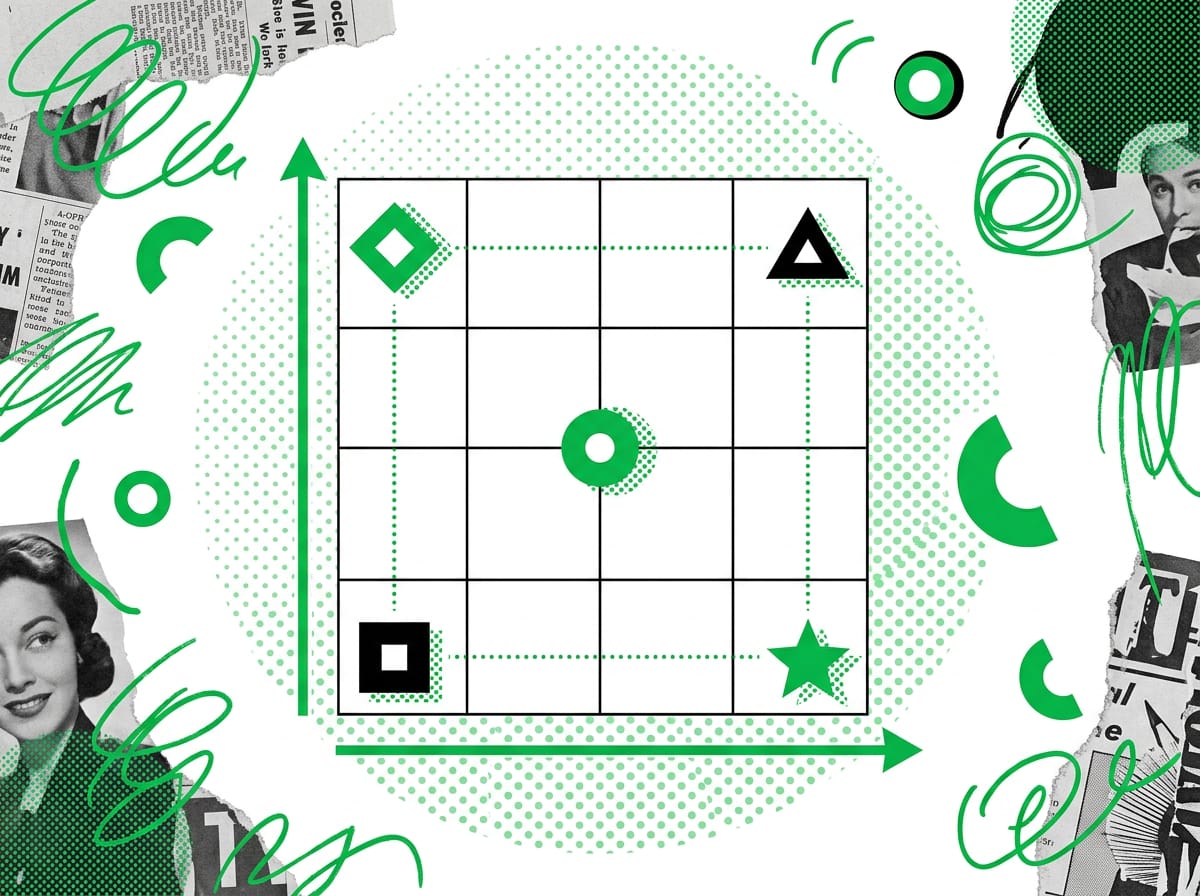
Whenever there’s friction, you have five ways to respond. The framework was made famous by the Thomas-Kilmann model and has been picked up in research on small firms 5:
- Competing. You impose your position.
- Collaborating. You look for a solution that covers everyone’s interests.
- Compromising. Each side gives something up.
- Avoiding. You put it off or let it drop.
- Accommodating. You give way to protect the relationship.
None of them is always right. What matters is picking the one that fits the situation, because the choice affects results. A study of 77 teams in technology companies found that a cooperative style supports team performance, while a competitive style is negatively associated with results 6. For your business, that means competing settles things quickly but leaves a bad aftertaste, while collaborating takes time and actually fixes the process.
| Style | When it works in a small business | When it backfires | What it sounds like |
|---|---|---|---|
| Competing | Emergencies, safety, non-negotiable decisions | On recurring issues: it breeds resentment | ”We’re doing it this way, we’ll talk later” |
| Collaborating | Repeated friction between departments, processes that need redesigning | On trivial matters: it wastes time | ”Let’s sit down and work out what you both need” |
| Compromising | Tight resources, budgets, the summer holiday rota | When a better solution was on the table | ”Let’s split the difference” |
| Avoiding | Minor issues, or the wrong emotional moment | When the problem is real and keeps coming back | ”Let’s pick this up on Tuesday when things have cooled down” |
| Accommodating | When the relationship matters more than the point | If you’re always the one giving way: you lose authority | ”Fair enough, let’s go with your approach” |
Take a moment to look at yourself. Almost every owner has a default style, usually competing (“I’ll decide, there’s no time”) or avoiding (“it’ll sort itself out”). Spotting your own reflex is the first step, because that’s exactly where you lose the conflicts you thought you’d settled. A disagreement handled well at the right moment saves months of tension, and the same goes for day-to-day communication within the team. Where people speak plainly, they fight less.
Mediation techniques: active listening and reframing
When two people on your team have stopped talking, your first job is to make each of them feel understood. Someone who feels heard drops their guard and starts thinking clearly again.
Active listening in practice
You can recognise active listening by three things you can actually observe. First, you don’t interrupt while the other person is making their point, not even to correct a detail. Second, you ask open questions that don’t steer towards an answer. “What exactly happened on Monday?” opens things up. “Don’t you think you overreacted?” shuts them down. Third, you check you’ve understood before you respond, by repeating back what you heard in your own words. It sounds simple, which is why hardly anyone does it under pressure.
Reframing: four before-and-after examples
Reframing means taking a complaint loaded with judgement and handing it back with the verdicts about the person stripped out, leaving only the facts. It’s the move that takes a personal conflict apart and brings it back to the task.
| What was said | Neutral reframe |
|---|---|
| ”Luca never meets his deadlines" | "So for you the problem is that work arrives after the agreed date, is that right?" |
| "Marta talks down to me" | "When she answers you in meetings, you feel belittled. Which moments in particular?" |
| "Sales couldn’t care less about the product" | "Your sense is that sales are promising things production struggles to deliver?" |
| "He does whatever he likes" | "You’d like to be consulted before decisions are made. On which steps?” |
You can go a step further by separating positions from interests. A position is what someone asks for (“I want to work from home on Fridays”). An interest is the need underneath (“I have to look after my son that day”). Very often, asking “what do you actually need?” instead of “what do you want?” opens up options neither of them had considered. Reframing done well, together with feedback given with a method before tensions boil over, heads off more conflicts than any mediation session.
How to use AI. AI can help you prepare for the conversation. Before you bring the two sides together, you can have it strip every personal judgement out of a written complaint. Paste this prompt into ChatGPT or Claude.
Here is a message an employee sent me about a colleague: [text]. Rewrite it in three neutral versions, with no judgements about the person, separating observable facts from interpretations. Then list five open questions I could ask to understand the situation better.
One rule is non-negotiable. Never paste sensitive information into external tools: health details, personally identifiable data, or anything involving harassment. Use AI to prepare your wording and keep confidential material out of it.
When the owner shouldn’t mediate (the two-hats problem)
Here’s the part nobody tells you. In a small business, the founder is the employer, the person who assesses performance and often one of the parties to the dispute, all at once. Your perceived neutrality is low by definition, and the people in front of you know it.
The numbers back this up. In an International Finance Corporation survey of 191 directors and board members, 47.8% said they try to mediate internal disputes, yet 34.3% admitted they’re often an active party in the conflict and 25.3% that they take sides 7. The same survey shows a gap worth remembering. 58.5% felt capable of resolving an internal dispute, but only 24.3% felt able to handle a conflict involving outside parties 7. The closer you are to the problem, the less able you are to untangle it.
Before you sit down as mediator, run through this checklist. Don’t mediate yourself if:
- you’re one of the two parties;
- one of the parties is a business partner, a relative or a close friend;
- there’s a pending decision on a promotion, pay rise or dismissal affecting either party;
- someone has explicitly asked to speak to somebody else;
- the issue involves harassment, discrimination or conduct with legal implications.
In these cases stepping in directly makes things worse, because any outcome will be read as favouritism. You need a third party: someone internal if you have a credible manager who isn’t involved, someone external otherwise.
Warning signs of escalation, and when to call in a professional
Most conflicts get settled in-house. In the IFC survey, 61.2% of disputes were resolved through internal negotiation and 25.2% through internal mediation, while only 3.1% ended up in court 7. The hard part is knowing when you’ve moved beyond what you can handle on your own.
These are the signs that a dispute is escalating and should go to an employment adviser, a professional mediator or a lawyer:
- the conflict has dragged on for weeks and no conversation has shifted it;
- one of the people involved shows physical or psychological symptoms, repeated absences or a sudden drop in performance. Clinical research links repeated personal attacks to real health consequences 1;
- the dispute spreads to other colleagues and people start taking sides;
- disciplinary proceedings come into play, or someone threatens to resign or take legal action;
- you’ve already tried mediating and it failed, or you’re one of the parties.
Move early. In the same survey, 29.6% of respondents had been through at least one internal dispute that threatened the very survival of the organisation 7. When mediation is used, it works. Cases handled by Acas, the UK’s public conciliation service, rose from 35 a year to 241 within five years, and the share of organisations using it climbed to 57%, with consistent results over time and high resolution rates 8. For small firms the bigger risk lies elsewhere, and the research documents it. They tend to prefer informal solutions but, fearing litigation, slide into formal processes; their front-line managers have little training in conflict handling; and they make poor use of the outside support available 5. Knowing who to call before you need them saves you from hunting for help in a panic.
A difficult conversation in six steps
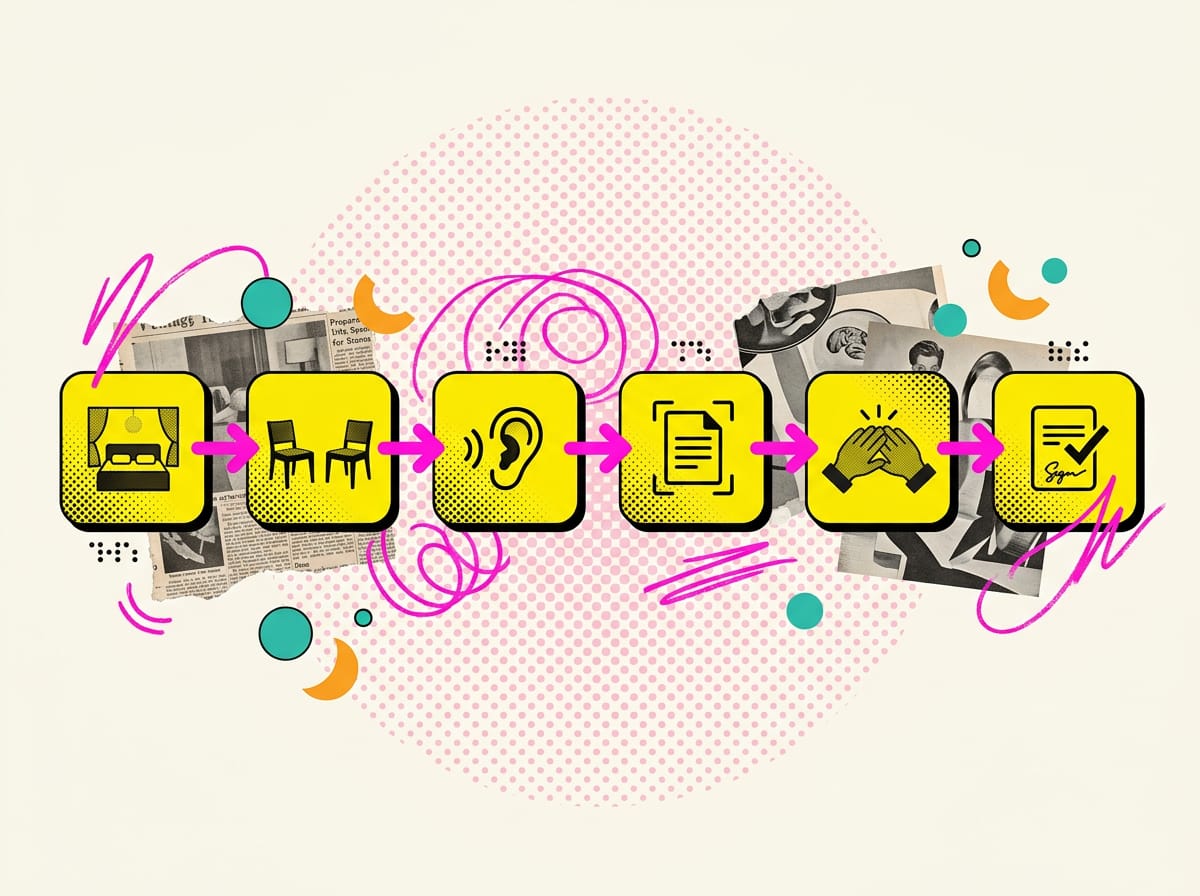
When you do decide to mediate yourself, follow a script. You can use this protocol tomorrow morning to get two people who’ve fallen out talking again.
- Set the scene. Bring them together somewhere neutral, not your office. State the purpose in one sentence, for example: “We’re here to sort out a work problem, not to decide who’s to blame.”
- Let each of them speak, one at a time. The speaker sets out the facts, the other listens without interrupting. You reframe after each one.
- Separate facts from interpretations. Write down on a sheet of paper what actually happened and what each person read into it. Often the whole conflict lives in that second column.
- Draw out the interests. Ask each of them what they need to do their job well.
- Build the solution together. Put two or three concrete options on the table and let them choose.
- Put the agreement and a date in writing. Who does what, by when, and when you’ll meet again to check in.
AI can cut down the prep here too. Before the meeting, you can have it play out the objections you’re likely to face, then help you write up clean notes afterwards. Try a prompt like this.
I need to mediate a conflict between two people on my team about [neutral description of the situation]. Act as the other side. Take turns playing both points of view and throw the toughest objections at me that I might hear. Then give me a six-point outline for running the meeting and a template for meeting notes with the columns “agreement reached”, “owner”, “deadline”.
Use the output to practise, then speak in your own words in the actual meeting. Training in handling different personalities is rated very useful by 74.8% of executives who’ve had it 7. You can build your own version this way, one simulated conversation at a time, until running a difficult conversation stops feeling daunting.
Further reading
Sources
Footnotes
-
Conflicts in the workplace, negative acts and health … - PMC. pmc.ncbi.nlm.nih.gov ↩ ↩2
-
Team-level predictors of innovation at work: A comprehensive meta-analysis spanning three decades of research.. cris.maastrichtuniversity.nl ↩
-
How Toxic Workplace Environment Effects the Employee Engagement: The Mediating Role of Organizational Support and Employee Wellbeing. mdpi.com ↩
-
Impact of Employees’ Workplace Environment on Employees’ Performance: A Multi-Mediation Model. frontiersin.org ↩
-
(PDF) Small Firms and Workplace Disputes Resolution. academia.edu ↩ ↩2
-
Team conflict management and team effectiveness: the effects of task interdependence and team identification. onlinelibrary.wiley.com ↩
-
[PDF] Research Paper - Lancashire Online Knowledge. knowledge.lancashire.ac.uk ↩
FAQ
How can I tell if a workplace conflict is healthy or toxic?
A conflict is healthy when it's about the work: goals, deadlines, data, technical choices. It turns toxic when the target shifts from the issue to the person, their motives or their worth. Listen to the language: "this process doesn't work" is healthy, "you can't do your job" is toxic.
What are the five conflict management styles?
They come from the Thomas-Kilmann model. Two of them are competing, where you push your own position, and collaborating, where you look for a solution that works for everyone. The other three sit between those two. None is right every time: the choice depends on what's at stake and on your relationship with the other person.
Who should handle conflict in a small business?
In companies of 10 to 30 people, conflict resolution almost always falls to the owner, because there's no HR department to act as referee. That's why you need a clear protocol instead of waiting for the tension to fade on its own.
When should you stop mediating yourself and bring in an outside mediator?
There's a clear signal that internal mediation is no longer enough. As long as the disagreement stays on the substance of the work, you can handle it yourself. Once it hardens into ongoing hostility, factions and exclusion, it's time to bring in a professional.
What damage does unresolved workplace conflict cause?
A toxic environment of hostility, exclusion and petty retaliation drags down engagement and leads to stress, burnout, anxiety and depressive symptoms, according to a study of 301 employees at small and mid-sized businesses. A positive climate does the opposite and lifts both performance and engagement.