
Scrollytelling Examples: 10 Luxury Brand Storytelling Case Studies
Scrollytelling examples from 10 luxury brands, with verified sources, a comparison table and what a small business can replicate on a tight budget.

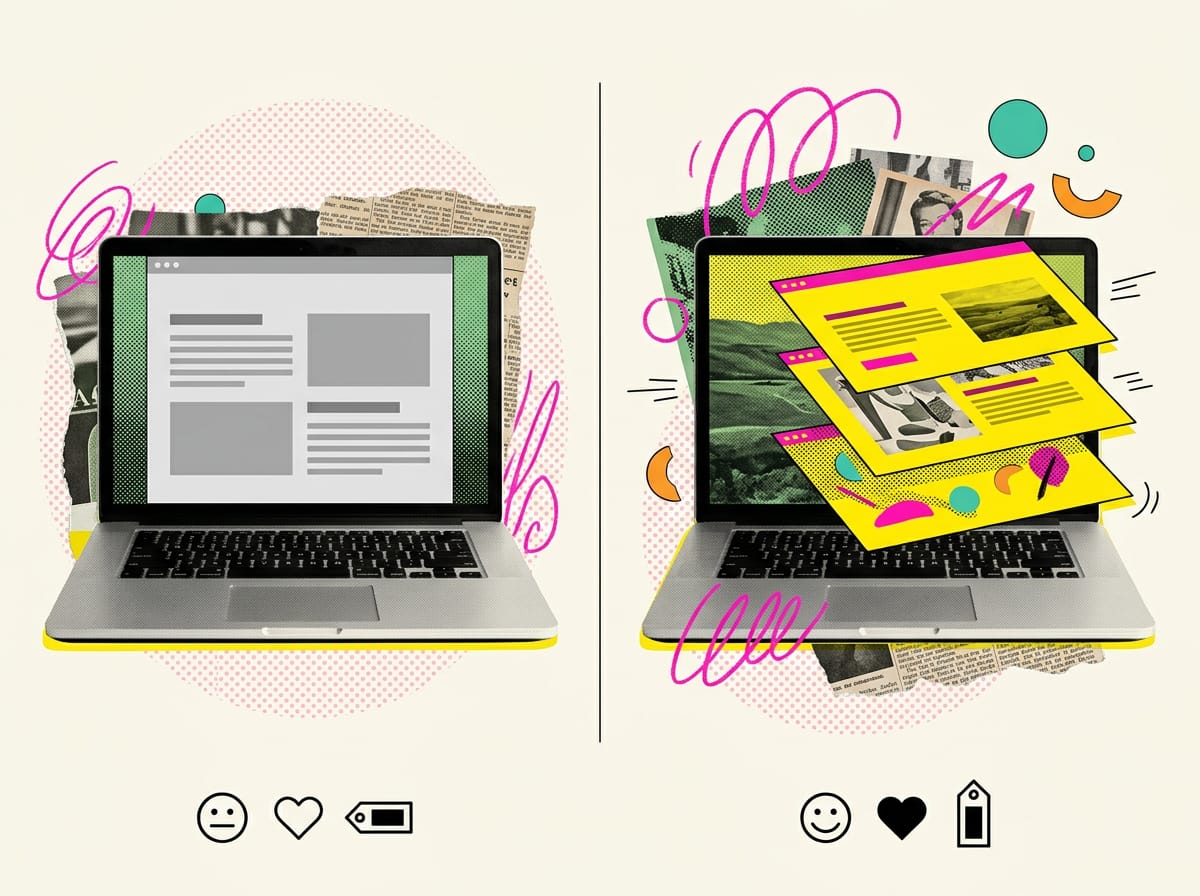
Two hundred and sixty-six people visited the same online store, a real shop that was already up and running, in one of two versions. The first told the brand’s story with text and still images. The second told the same story with image layers that slid past each other as you scrolled, in parallax. People who saw the second version had a better experience, rated the brand more favorably and said they’d be willing to pay more1.
For a high-end brand, that willingness to pay more is the whole reason to do marketing in the first place. So I lined up 10 examples of brand scrollytelling and luxury storytelling and ran every one through the same scorecard. You’ll also find a comparison table, four patterns that keep showing up and what a small or mid-sized business can realistically recreate with the resources it has. The design side, meaning how you actually build scrollytelling for brands, stays in the background. This piece is about the story.
What makes scroll-driven storytelling feel “luxury”
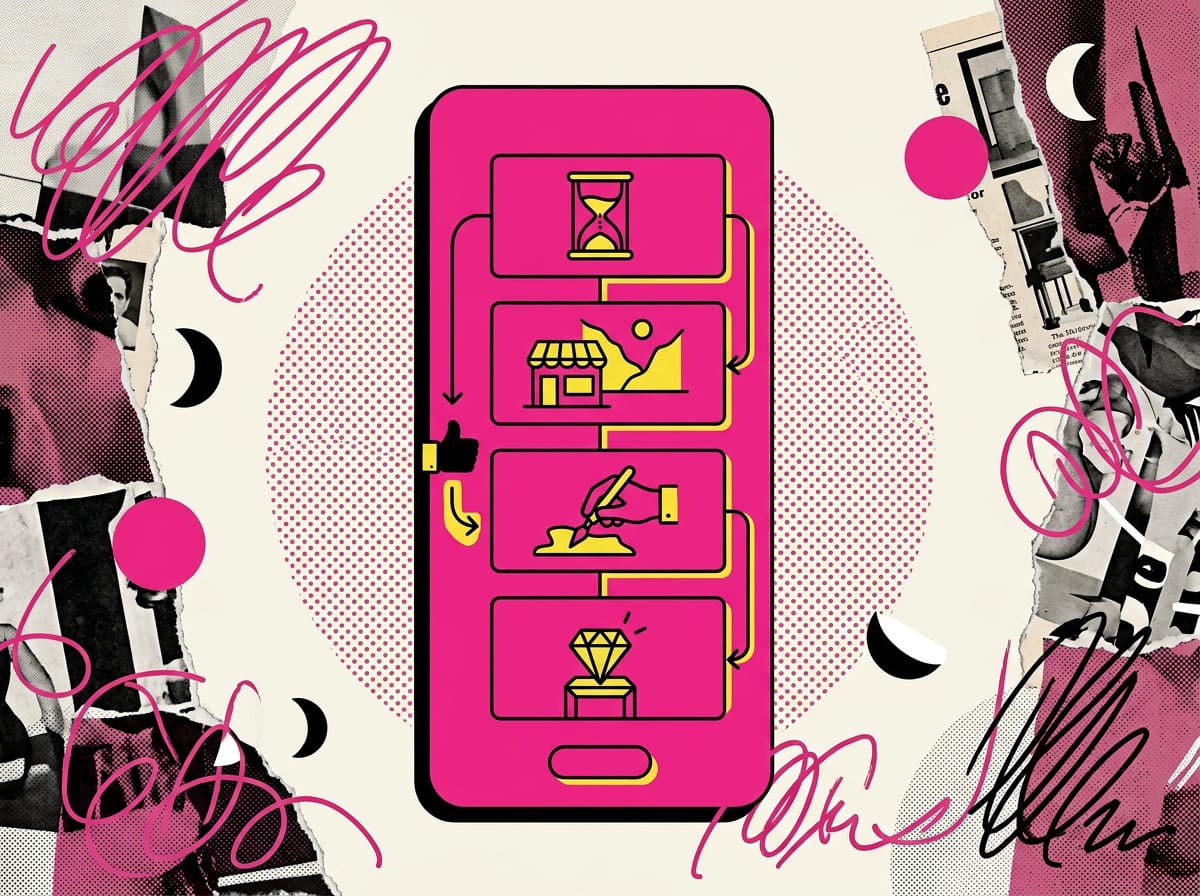
Luxury scroll storytelling is a high-end brand’s story built so that every stretch of scroll opens a new scene. Origin comes first, then the craft, then the object, and the invitation sits at the very end. The reader moves their thumb and the story moves with them, one scene at a time, with no spec sheets to compare.
The same four ingredients show up in every case below. The breakdown is my own, and it’s simply a lens for reading the cases:
- Time. Years of aging, hours of work, a story that started long before the customer showed up.
- Place. A valley, a workshop, a building with a date on its facade.
- Hand. A person working the material while the reader watches.
- Rarity. A few bottles, a handful of rooms, a piece that can’t be made the same way twice.
Research gives a concrete reason to tell these things in sequence instead of listing them. Narrative transportation, being “absorbed into a story,” is a distinct mental process. People who are transported feel removed from the real world, experience strong emotions and shift their attitudes even after they’ve left the story2. Escalas set narrative transportation directly against analytical elaboration, as separate routes to persuasion3. In luxury, the connection is spelled out in the very title of König, Haase and Hennigs’ paper, which looks at storytelling as a driver of luxury brand perception and consumer behavior4. It’s the same psychology that powers persuasive storytelling for small businesses. For this piece, one finding from the online store study is enough: with narrative parallax, brand associations reach consumers’ minds efficiently and improve attitudes toward the brand, both explicitly and implicitly1.
How I picked and read the 10 cases
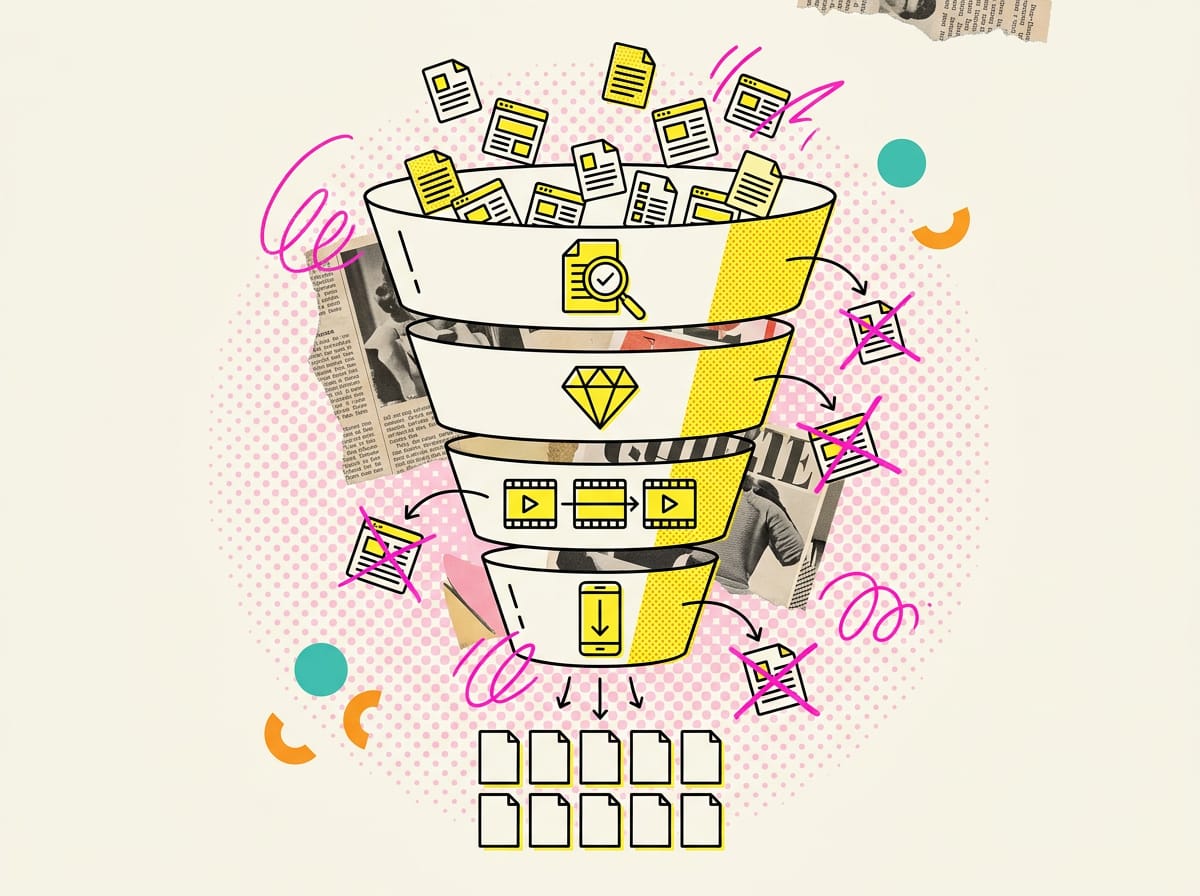
I’ll get this out of the way first, because how a collection is chosen changes what it’s worth. I looked for cases documented in academic sources and applied four filters:
- A verifiable primary source. Every case is documented by a peer-reviewed study or an academic book.
- High end. Luxury or premium brands, or settings studied specifically in a luxury context.
- A narrative sequence. The case tells something in a deliberate order, and the visual effects serve that order.
- Transferable to scroll. Each case yields at least one rule you can apply to a scrolling page.
One honest caveat. Only the first case is a scrolling page in the strict sense. The others are an immersive brand story, a short film, a web series, social content, and experiences in virtual reality and the metaverse. I included them because they’re brand narratives backed by academic sources, and their sequence carries over to a page that scrolls.
The 5-line scorecard Protagonist · Promise · Scene sequence · Role of the scroll · Where the sales ask sits. The first two fields come from the source. Sequence, role of the scroll and sales ask are my own adaptation to a web page, and I flag them as such. Each case closes with the result, when the source reports one.
The 10 cases, one scorecard at a time
1. The parallax online store
This is the only experiment in the group run on an online store. The researchers took an existing, fully working shop and tested it in two conditions: a text-based version and a version with parallax storytelling. Causal relationships were measured with a structural equation model (PLS-SEM), backed by an implicit association test for the part that slips past conscious awareness1.
- Protagonist: the store’s brand. The study summary doesn’t name it or say whether it’s a luxury brand.
- Promise: a brand you trust enough to pay more for.
- Sequence (adaptation): who we are, where we come from, how we work, the product.
- Role of the scroll: moves the story forward, with image layers sliding at different speeds.
- Sales ask: inside the shop, after the story.
Result: a better experience, more positive brand attitudes on both the explicit and implicit level, and greater willingness to pay a price premium. The study analyzes the causal links between user experience, brand attitudes and behavioral intentions, meaning purchase intention and price premium1.
2. L’Odyssée de Cartier
Vouldis and Christoforou use L’Odyssée de Cartier as a case study to understand how luxury brands blend art, technology and immersive storytelling to deliver “sublime” experiences. Alongside the case they run a quantitative survey, read through the lens of brand experience, emotional branding and brand symbolism theories5.
- Protagonist: the brand itself, told as a symbol.
- Promise: a powerful, meaning-laden emotion tied to the brand.
- Sequence (adaptation): one scene per chapter of the story, with the brand as the through-line and no price list in sight.
- Role of the scroll: sets the pace, the way editing does in a film.
- Sales ask: outside the story. The narrative builds the bond and the sale happens somewhere else.
Result: the study offers practical guidance for luxury brand managers. The source reports no sales data tied to the case5.
3. BMW “The Hire”
In 2001 BMW launched its first short film, the series “The Hire.” Each episode ran 8 minutes and showed off the key features of BMW cars inside a story6.
- Protagonist: the characters in the film, with the car on screen.
- Promise: watching the car do what a spec sheet can only claim.
- Sequence (adaptation): setup, tension, the object that resolves it, the ending.
- Role of the scroll: reveals the features one at a time, each inside its own scene.
- Sales ask: once the story is over.
Result: the study ties the effectiveness of short films to narrative transportation. It reports no sales figures for The Hire6.
4. The web series as a format
A web series is a format built on episodic stories, typically 5-15 minutes long6.
- Protagonist: a recurring character.
- Promise: a new chapter every time you come back.
- Sequence (adaptation): one page per episode, each ending on a hook into the next.
- Role of the scroll: marks off the chapters.
- Sales ask: the sign-up, so you don’t miss the next chapter.
Result: the same source cites a 2018 Pixability analysis finding that the top 100 brands publishing video on YouTube gained, on average, 39% more subscribers and 42% more likes. These figures cover branded video in general, with no separate numbers for luxury6.
5. The luxury hotel on social media
A study of narrative advertising by luxury brands, set in high-end hospitality, based on 193 valid responses from social media users collected through Amazon MTurk7. It’s the closest case for anyone running a luxury hotel with a narrative scrolling website.
- Protagonist: the guest, picturing themselves at the property.
- Promise: a stay you can see before you’ve even booked it.
- Sequence (adaptation): arrival, room, dinner, evening, departure.
- Role of the scroll: marks the hours of a day.
- Sales ask: the availability request, at the bottom.
Result: a story that’s easy to follow and easy to picture increases narrative transportation. The reader’s own tendency to get swept up matters too. Transportation leads to positive emotions, better attitudes toward the brand’s social profiles and more favorable intentions toward those profiles7.
6. Sustainability in 360° virtual reality
A lab experiment with 110 consumers. The same sustainability story from a luxury brand was shown in an immersive version, in 360° virtual reality, and in a non-immersive version8.
- Protagonist: the brand and its environmental commitment.
- Promise: seeing with your own eyes where and how the product is made.
- Sequence (adaptation): the place, the material, the process, the impact.
- Role of the scroll: walks the reader into a setting, scene by scene.
- Sales ask: the collection, linked back to the story of the material.
Result: the immersive version produced a more emotional experience, and that emotional experience improved the brand’s sustainable image8.
7. Luxury fashion in the metaverse
Wang, Tan, Bai and Ryu studied how luxury fashion brands use experiential marketing in the metaverse. The key elements they identify are virtual try-ons, interactive advertising and brand storytelling9.
- Protagonist: the customer, stepping into the brand’s space.
- Promise: a personal experience, like being in the boutique.
- Sequence (adaptation): entrance, discovery, try-on, choice.
- Role of the scroll: opens up the spaces one after another.
- Sales ask: trying on the piece.
Result: immersion and interactivity raise perceived value, satisfaction and loyalty, and push people toward buying9.
8. Five social components of luxury brands
Kalogeras, at Heriot-Watt University, analyzed users’ emotional reactions to five components of luxury brands’ social storytelling: image posts, captions, stories, hashtags and comments. The analysis used the VADER and BERT models10.
- Protagonist: the brand, with the audience helping to build the meaning.
- Promise: being part of the story.
- Sequence (adaptation): curated scenes first, participation at the end.
- Role of the scroll: keeps the formal scenes in order.
- Sales ask: after the curated section.
Result: the more formal components produce more positive experiences. Interactive elements are associated with more scattered meanings and more negative emotions10. This is the finding I’d use as a yardstick for any scrolling page. Scrolling that moves the story forward helps, and every extra interaction risks scattering it.
9. Digital heritage in luxury fashion
The book edited by Amanda Sikarskie (Routledge, 2020, 210 pages) looks at how luxury fashion brands use their own history in digital storytelling. It brings together authors from several countries and covers brands from Britain, China, France, Japan, India, Italy and Turkey11.
- Protagonist: the brand’s archive.
- Promise: an identity that lasts.
- Sequence (adaptation): the founding, pieces from the archive, today’s collection.
- Role of the scroll: rolls through the years.
- Sales ask: the current collection, presented as the archive’s heir.
Result: the book doesn’t measure any effect on sales. It does point out that this kind of storytelling carries a lot of weight in luxury marketing and hadn’t yet been studied systematically11.
10. The ambiguous story and the people who can’t stand it
Glaser, Choi and Baumgartner study how consumers’ need for closure, meaning how well they cope with a story left hanging, affects narrative transportation and brand attitude in narrative ads12.
- Protagonist: the reader and their tolerance for ambiguity.
- Promise: a story that wraps up, or one that leaves room.
- Sequence (adaptation): evocative scenes, with a final scene that pins down the meaning.
- Role of the scroll: builds toward the ending.
- Sales ask: right after the closing scene.
Result: the study’s title makes clear that reactions to ambiguity vary from person to person. For a luxury page packed with evocative imagery, the practical rule I take from it is simple: leave a final scene that spells out exactly what you offer.
Comparison table
| # | Case | Format | Who carries the story | Measured data in the source |
|---|---|---|---|---|
| 1 | Parallax online store | Scrolling page | The brand | Yes, 266 respondents |
| 2 | L’Odyssée de Cartier | Immersive story | The brand as a symbol | Survey plus qualitative case |
| 3 | BMW “The Hire” | Short film | The characters, with the car | No |
| 4 | Web series | 5-15 minute episodes | A recurring character | General Pixability data |
| 5 | Luxury hotel on social media | Social content | The guest | Yes, 193 responses |
| 6 | Sustainability in virtual reality | 360° virtual reality | The brand and the material | Yes, 110 consumers |
| 7 | Luxury fashion in the metaverse | Virtual space | The customer | Not stated |
| 8 | Five social components | Social | Brand and audience | Sentiment analysis |
| 9 | Digital heritage | Various | The archive | No |
| 10 | Ambiguous story | Narrative ads | The reader | Not stated |
Four patterns that keep coming back
The product lives inside a scene. BMW showed off its cars’ features inside an 8-minute story6. On a page, that means each stretch of scroll shows a single quality, in action.
Low effort for the reader. Narrative transportation also differs from analytical elaboration in how much cognitive effort it demands2. Interactive elements, meanwhile, scatter the meaning10. That’s why the only thing I’d ask of the reader is to scroll. No quizzes, no sliders to drag, no pop-out menus halfway through the story.
Images that are easy to picture. In the hotel case, a clear story that’s easy to imagine increases transportation7. In practice, one scene equals one image and one sentence. If a scene needs three paragraphs to make sense, split it.
Immersion first, price second. In the parallax store, the virtual reality case and the metaverse, immersion comes before the decision and lifts how the brand is perceived198. The call to buy belongs at the end of the sequence, once the reader has already “lived in” the story.
What a small business can recreate with far fewer resources
A small business can recreate the sequence, which is the part that does the heavy lifting, without Cartier’s storytelling budget or a space in the metaverse. Here are three examples.
A small winery opens with the vineyard at dawn, then hands at harvest, then the cellar, then the bottle, and only at the very end the form to book a visit. Five scenes, five good photos and five sentences are all it takes.
A custom furniture workshop follows a single table, from rough timber to delivery at the client’s home. The protagonist is the maker, and the promise is a one-of-a-kind piece.
A hotel builds the page as a single day, from arrival to evening, with the availability request after the last scene.
These three pages need a photo shoot planned scene by scene, short copy, and development that ties the images to the scroll. It’s the same combination behind the visual polish of the finished work in the scrollytelling site gallery and the scrollytelling case studies. On our side, the design team handles the direction and the build.
Before you call a photographer, write the shot list. This prompt pulls it out of material you already have:
You are a scriptwriter for high-end brands. Below I'm pasting a
description of my company, my main product and my typical customer.
Write a sequence of 5-7 scenes for a scrolling web page.
For each scene, give me: what's on screen (a single image), the line
that goes with it (15 words max), and which of time, place, hand and
rarity it tells. The product must appear inside a scene, never as a
feature list. The contact request comes only after the last scene.
No interaction other than scrolling.

[paste the description here]
How to use AI to take apart a reference site
Method comes before tools. Pick a site you like, go through it once without taking notes, then go through it again and mark every scene change. AI speeds up that second pass and makes it easy to compare against the scorecard.
Copy the visible text of the page, scene by scene, and paste it into Claude or ChatGPT with this prompt:
Read this scrolling page as a story and set the design aside.
Fill in this scorecard:
1. Protagonist: who carries the story?
2. Promise: what does someone who reaches the end get?
3. Sequence: list the scenes in the order they appear.
4. Role of the scroll: does it move the story forward or ask for
   extra actions?
5. Sales ask: where does it appear, and after which scene?
Then flag every point where the reader has to do something other
than scroll, and every scene that can't be understood from one image
and one sentence.

[paste the page text here]
Run the second check on your own draft, before anything gets built:
This is the outline for my page. For each scene, tell me whether
someone who needs clear answers understands what I'm offering. If the
ending stays ambiguous, rewrite only the last scene so it says in one
sentence what I sell and who it's for.

[paste the outline here]
The second prompt comes straight from case 10. A page full of evocative images holds up when the final scene makes the meaning clear, even for readers who don’t like stories left open.
Sources
Footnotes
-
Storytelling in online shops: the impacts on explicit and implicit user experience, brand perceptions and behavioral intention. emerald.com ↩ ↩2 ↩3 ↩4 ↩5
-
Persuasion by Narrative Transportation. journal.psych.ac.cn ↩ ↩2
-
Self‐Referencing and Persuasion: Narrative Transportation versus Analytical Elaboration. doi.org ↩
-
…and they lived luxury ever after: storytelling as a driver for luxury brand perception and consumer behaviour. doi.org ↩
-
Can Luxury Brands Coexist in Harmony with art, Technology and Immersive Storytelling to Reach Sublime Emotions?. link.springer.com ↩ ↩2
-
The Role of Narrative Transportation in Web Series as Branded Entertainment. koreascience.or.kr ↩ ↩2 ↩3 ↩4 ↩5
-
Narrative persuasion in social media: an empirical study of luxury brand advertising. doi.org ↩ ↩2 ↩3
-
The effect of immersive sustainability storytelling in 360° virtual reality on the emotional experience and sustainable brand image of a luxury brand. doi.org ↩ ↩2 ↩3
-
Exploring Experiential Marketing Strategies of Luxury Fashion Brands in the Metaverse: An In-Depth Analysis of Immersive Consumer Engagement. link.springer.com ↩ ↩2 ↩3
-
A Smart Framework for Making Stories Smarter through Transmedia … researchportal.hw.ac.uk ↩ ↩2 ↩3
-
Storytelling in Luxury Fashion: Brands, Visual Cultures, and Technologies. play.google.com ↩ ↩2
-
(Un)Bothered by the Story’s Ambiguity: How Individual Differences in Consumers’ Need for Closure Affect Transportation and Brand Attitude in Narrative Ads. doi.org ↩
FAQ
What is scrollytelling for a luxury brand?
It's a way of telling a high-end brand's story where each stretch of scrolling opens a new scene: first the origin, then the craft, then the product and finally the invitation. The reader moves the story forward one scene at a time, with no spec sheets to compare.
Does scrollytelling actually increase a product's perceived value?
A study on a real online store with 266 participants compared a static version with a narrative parallax version. People who saw the scrolling version rated the brand higher and said they were willing to pay a higher price.
What should effective luxury brand storytelling include?
Four ingredients show up across the cases we analyzed: time (years of aging, hours of work), place (a valley, a workshop, a historic building), the hand (a person shaping the material) and rarity (few pieces, few rooms, one-of-a-kind objects).
Why tell a brand's story in sequence instead of listing its strengths?
Research on narrative transportation shows that people absorbed in a story feel stronger emotions and shift their attitudes even after it ends. It's a different route to persuasion than analytically processing data and features.
Can a small business with €1-1.5M in revenue use scrollytelling?
Yes. The article identifies four recurring patterns in the luxury cases and shows which ones a company of that size can rebuild with its own resources, starting from the story before the technology.
How were the 10 case studies selected?
Each case needed a verifiable primary source (a peer-reviewed study or an academic book), had to involve a luxury or premium brand and had to tell a narrative sequence. Promotional examples without measured results were excluded.