Buyer Persona vs ICP vs Target Audience: A Small Business Example
Target audience is the market, ICP is the ideal company, buyer persona is who signs off. An 8-row comparison table and one SMB described all three ways.

A sales rep walks into a meeting and says the team needs to “nail down the ICP.” The marketing lead replies that they already have a target: “companies in Northern Italy with 20+ employees.” The owner, who heard about buyer personas on a course once, asks whether they’re all just saying the same thing three ways. They aren’t. They’re mixing up three tools built for three different decisions, and the mix-up costs real money: ad budget spread across an audience that’s far too wide, prospecting lists full of companies that will never buy, landing pages written for nobody in particular.
Buyer persona, ICP and target audience are three zoom levels on the same market. Treat them as synonyms and you end up filling in one of them and using it for everything, which means using it badly everywhere. Below you’ll see where each one stops, when you need it, and which order to build them in when you have twenty customers and no market research to lean on.
Three zoom levels, from the pool to the face
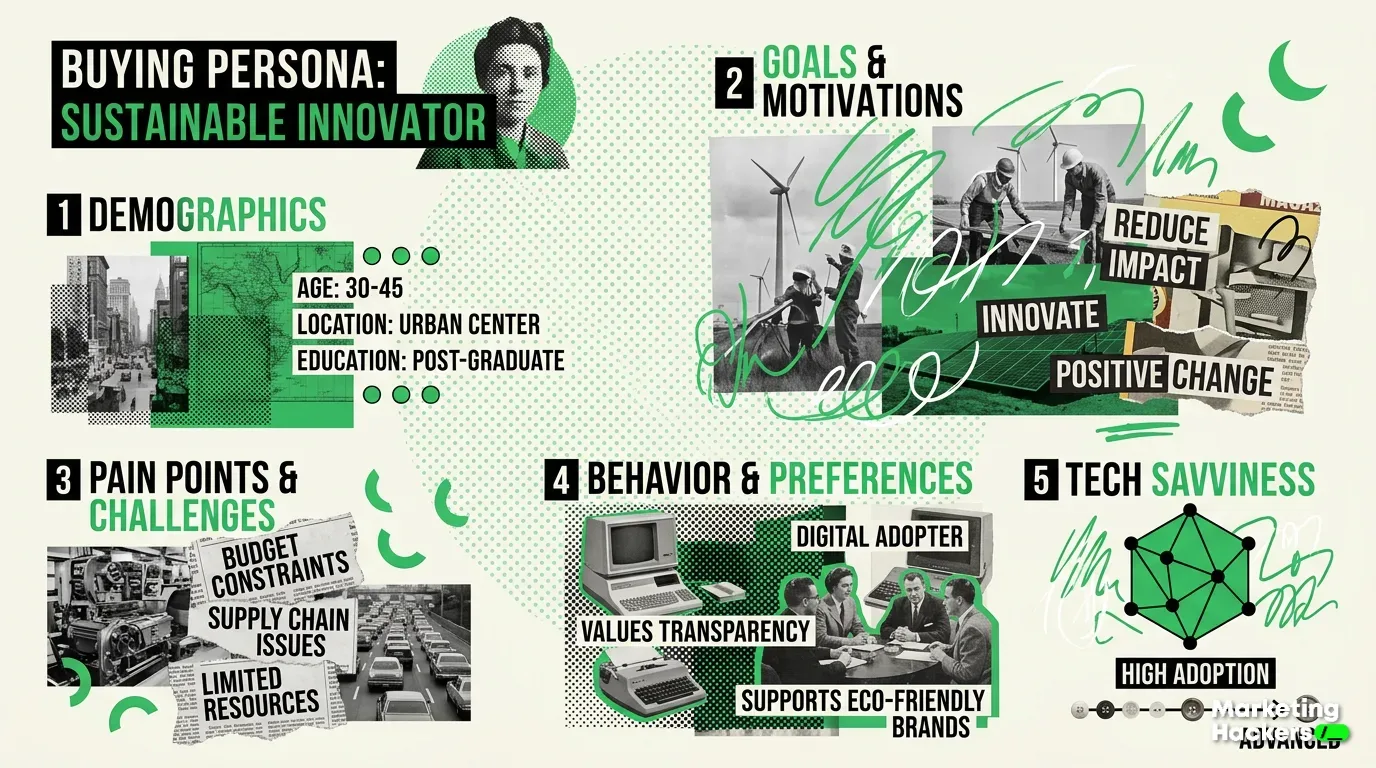
Picture your market from three different heights.
From the top you see the target audience: the pool. That’s every person or company that could, in principle, buy what you sell. It’s defined in broad strokes, mostly demographics, geography or industry. “Italian manufacturing SMEs” is a target audience. It’s wide by design. Its job is to mark out the playing field; picking individual customers is what the two levels below are for.
Drop a bit lower and you reach the ICP, the ideal customer profile: the filter. Here you describe the kind of company that’s genuinely worth serving, the one that buys quickly, sticks around, pays well and leaves you a margin. In B2B the ICP is a firmographic profile: industry, size, revenue, structure, tech maturity. It’s narrow on purpose, because its job is to rule companies out.
Drop lower still and you reach the buyer persona: the face. This is the flesh-and-blood person inside that ideal company who reads your email, weighs up the quote, and either takes the project to their boss or kills it. They have a role, goals, fears, a way of talking. Personas started out as a design technique for understanding and communicating the goals and needs of different user types, and that’s still what they’re for.
The right sequence runs from wide to narrow to concrete: pool, filter, face. Most articles you’ll find compare two terms at a time, “target vs buyer persona” or “ICP vs buyer persona”, and leave the third one out. Line all three up and they stop looking like synonyms. They become three tools with three jobs.
What each one actually describes
The deepest difference, and the one almost nobody explains, is the thing you’re describing in the first place.
A target audience describes a market. Marketing research draws a hard line between market segmentation and customer segmentation: the first is about strategically distinct markets, the second about different groups of people.1 For the past seventy years the two have been treated as one, to the point where “market segmentation” has effectively become a synonym for “customer segmentation”. They’re still two separate things.1 When you say “my target is manufacturing in the North,” you’re talking about a market, a space. You haven’t got to people yet.
An ICP describes a type of company, the ideal customer in the B2B sense. It’s a tight portrait of your best customers, the ones you’d happily clone twenty times over, built by isolating the handful of accounts that perform best and setting the average ones aside. You build it by looking at who already buys from you on good terms and asking what they have in common.
A buyer persona describes a human being. That’s the leap that makes the persona different from every other tool here. As persona research points out, there’s a huge psychological gap between designing for an anonymous target group of “women aged 24 to 35” and designing for Jane, a stressed single mum who wants to manage her time better.2 A persona makes you write and decide with Jane in mind, her name and her day, instead of an age bracket. Personas work as mental models that keep the customer in view whenever you make decisions about product, content and messaging, even when that customer isn’t physically in the room.2
If you want a refresher on what personas are and where they came from, I’ve covered that in what buyer personas are. Here we’re looking at where one level ends and the next begins.
The table that keeps them apart
This is the cheat sheet most people need. Eight rows, three columns: the difference between target and buyer persona, with the ICP in between.
| Target audience | ICP | Buyer persona | |
|---|---|---|---|
| What it describes | a market, a pool of potential buyers | the type of company worth serving | the real person who decides inside that company |
| Unit of analysis | segment, category | company (account) | individual |
| Starting data | demographics, geography, industry | firmographics of your best customers | interviews, sales conversations, support |
| Who uses it | marketing and comms | sales and management | whoever writes content, emails, landing pages |
| For which decision | where to show up, which audience to invest in | which accounts to contact and prioritise | which message to send and which objections to tackle |
| How many you need | one or a few | one, two at most per product line | one per decision-making role |
| When to update it | rarely, if you change markets | every time you analyse closed deals | when the way customers talk changes |
| Typical mistake | confusing it with strategy | describing the average customer instead of the best | stuffing it with useless demographic detail |
One more word on the persona mistake. Filling a profile with age, gender, hobbies and the make of their car won’t help you sell inventory software. What matters is what the person is trying to get done and what’s standing in the way, because that’s where the message comes from.
A €1.2M SME, all three levels stacked
Take a software house selling a warehouse management module to manufacturing SMEs. €1.2M revenue, eight people, consultative sales with a three-to-four-month cycle. Here are the three levels, one under the other.
Target audience. Italian manufacturing SMEs with physical stock and more than one warehouse. That’s the pool. It holds thousands of companies, most of which will never buy, and that’s fine. It tells you which trade magazines, trade fairs and search terms are worth paying for.
ICP. Manufacturers with 20 to 80 employees and €5M to €30M in revenue, running at least two warehouses, already on an ERP but without a proper inventory module, concentrated in Lombardy, Veneto and Emilia. This profile comes from the twelve best customers the company has already closed, the ones who signed quickly and renewed. Out of fifty open deals, the ICP tells you which fifteen deserve a call from the owner and which don’t.
Buyer persona. Inside that ideal company there are two faces. The first is the operations manager who fights with wrong stock counts every quarter and is the one who takes the problem to management; you talk to them about inventory errors and wasted hours. The second is the owner or finance director who signs off and wants to know how many months until the spend pays for itself. Same company, two people, two different messages. A canvas with the ICP built in helps you keep both faces under the same company profile.
Look at what happens when you fill in only one. With only the target (“manufacturing in the North”), your sales rep phones anyone and burns whole days. With only the ICP, you know who to call but not what to say. With only the persona, you’ve got a great message aimed at the wrong crowd.
Narrow down to sell, widen out to get known
There’s a tension that worries owners when they first hear about ICPs. Sales instinct says narrow it down, talk only to people who buy. At the same time there’s a nagging, and correct, feeling that narrowing too far means giving up on being known by the rest of the market.
You resolve it by keeping the three levels on separate tracks instead of picking just one.
The target audience stays wide, because awareness comes from being seen across the whole category, including people who’ll buy in two years’ time, or never, but who talk to the people who will. Brand communication works on the pool.
The ICP stays narrow, because sales resources are scarce and belong where deals close. The phone call, the quote, the rep’s time all go to the ideal company.
The persona stays specific, because a message aimed at everyone lands with no one. Each piece of content, each email, each landing page speaks to one particular face.
Put simply: be findable broadly, sell selectively, speak personally. Three separate jobs, three separate tools, and no compromise required.
What to fill in first when you have no data
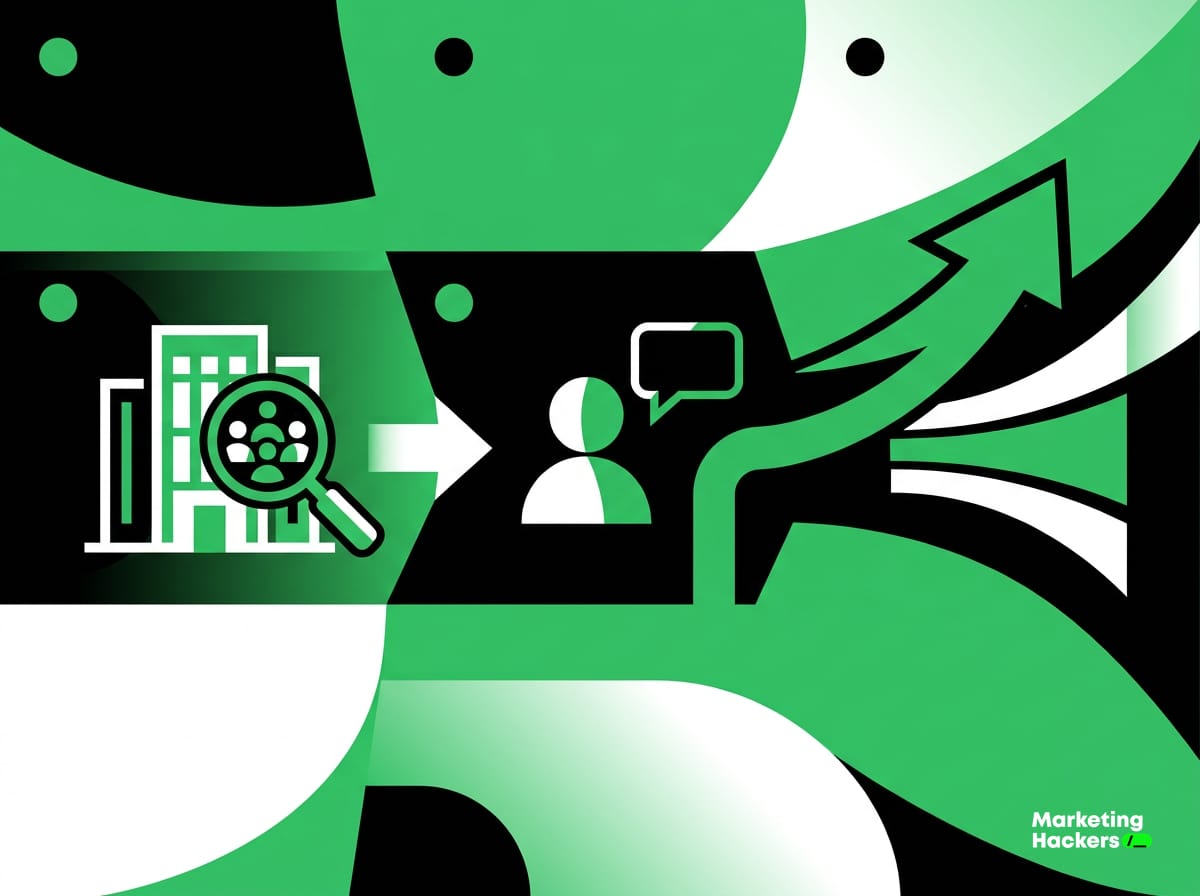
The question SME owners actually ask is practical. I have twenty customers and no market research, so where do I start? The answer flips the order these concepts are usually taught in.
Start with the ICP. Starting in the middle feels backwards, yet it’s the level you already have the data for. Nothing to imagine. You look at the customers you’ve closed, pick out the best five or six, and ask what they have in common. There aren’t many, you know them by name, and in an afternoon you have a solid profile.
Then the personas. Once you know which companies are ideal, call three or four people inside them and get them talking. That’s where the goals, the objections and the real vocabulary come from. Personas are built on interviews, on the words of the people who actually make the call inside those companies.
The target audience last, by extension. You get the pool by widening the ICP: take the narrow profile and open it up to the category. If your ideal companies are Northern manufacturers with two warehouses, your target is “Italian manufacturers with physical stock”. Start from a wide target and try to narrow it down to the persona and you’ll almost always get lost, because you’re guessing when the good data is already sitting in your CRM.
If you don’t have any of these documents yet, a template built for SMEs gives you a structure to fill in so you’re not staring at a blank page.
How the three levels feed your marketing plan
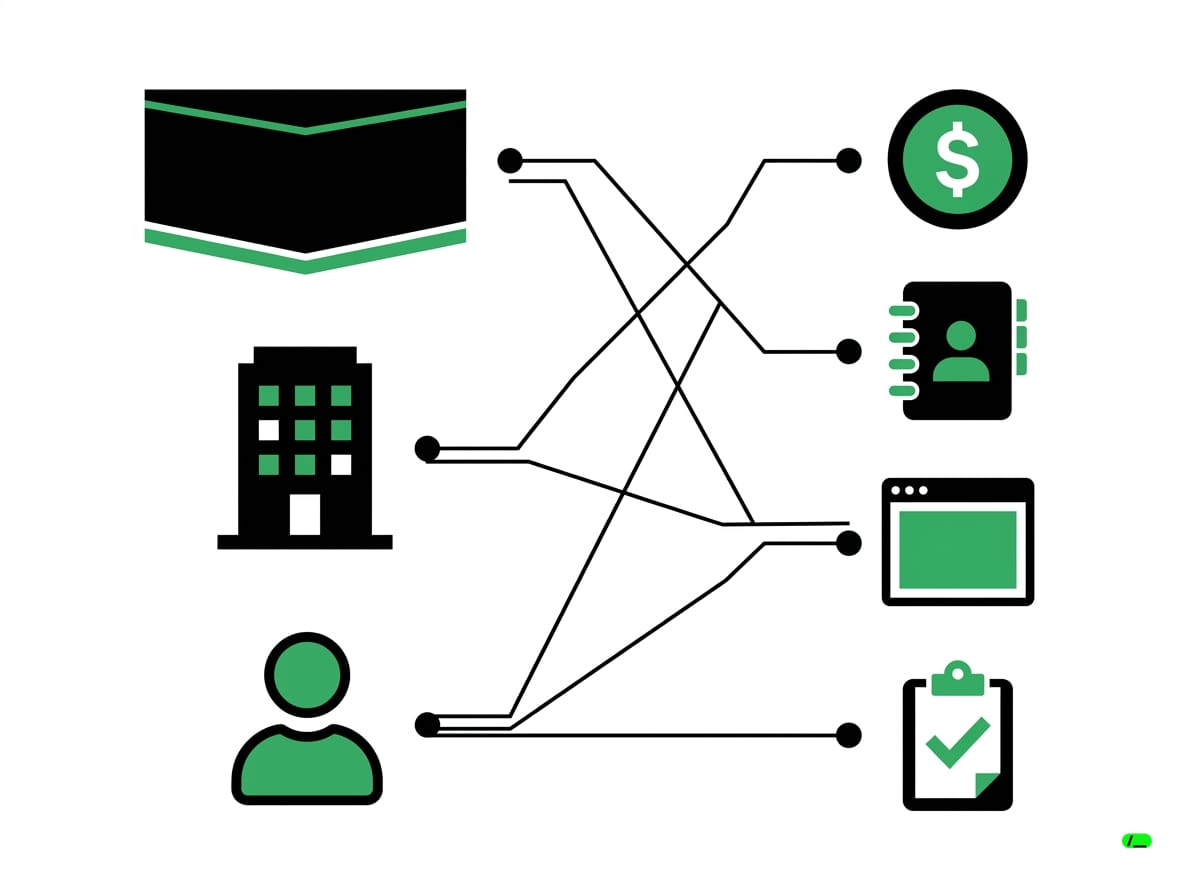
Separating them is pointless if they end up in a drawer. Take the real decisions one at a time.
Campaign budget is set using the target audience and the ICP together: the wide audience for the awareness side, the tight firmographic criteria for the lead-gen side, so you’re not paying for clicks from companies outside your profile.
The prospecting list comes from the ICP alone. Every name that doesn’t meet the firmographic criteria is wasted sales time. A good ICP cuts the list down noticeably and pushes your close rate up.
The brief for whoever writes the landing page comes from the persona alone. The designer or copywriter needs a face in front of them, or they’ll produce generic copy. This is where the persona is worth more than any other document.
Qualification criteria for quotes come from the ICP crossed with the persona. The ICP tells you whether the company is worth it; the persona tells you whether you’re talking to the decision-maker or to someone collecting quotes for comparison.
On why all this matters so much for a small business with limited budget and time, I’ve written about why an SME needs buyer personas.
Where AI speeds things up, without blurring the levels
AI is useful here on one condition: you hand it the right level to work on. Ask it vaguely to “create some buyer personas” and you’ll get back demographic fluff. Use it to speed up a process you’ve already set up and it saves you hours.
To pull an ICP out of the customers you already have, paste your best customers’ data into a model like Claude or ChatGPT and use a prompt along these lines.
“Here’s the data for our 10 customers who closed fastest and renewed. For each one you’ll find industry, headcount, revenue, region, tech stack and contract value. Identify the firmographic traits these customers share that set them apart from the customers we lost or who pay late. Give me an ICP of five criteria at most, ranked from most to least distinctive.”
To audit your current plan and find out which level is missing, use a second prompt.
“Below is the brief we use to run marketing and sales. For each of our activities (campaigns, prospecting, content, quotes), tell me whether it’s using the right level out of target audience, ICP and buyer persona, and flag anywhere we’re using the broad target for a decision that calls for the ICP or the persona.”
The AI speeds up work that’s still yours to do. The quality of the output depends far more on the real customer data you feed it than on the model.
Do you need an ICP in B2C too?
Yes, though in B2C the ICP effectively merges with the target segment. The person paying and the person using the product are the same, so there’s no separate company to profile apart from the decision-maker. In practice, you define your B2C ICP at the same moment you define your target.
In B2B the ICP stands as its own level precisely because the company that buys and the person who decides are two different entities. You can have the perfect company with the wrong person in the seat, or the ideal person in a company you don’t need. That’s why B2B needs all three, while B2C gets by with two: the target and the persona.
Further reading
Sources
Footnotes
FAQ
What is the difference between a buyer persona and an ICP?
An ICP describes the kind of company worth serving, using firmographic criteria like industry, headcount and revenue. A buyer persona is the real person inside that company who reads your email, weighs your quote and signs off. One filters companies, the other puts a face on the buyer.
In what order should I build my target audience, ICP and buyer persona?
Go from broad to narrow to concrete. Start with the target audience to define the market, then the ICP to filter for ideal companies, then the buyer persona to put a face on the decision-maker. Following this order stops you from building just one and stretching it to cover everything.
What is a target audience and how is it different from an ICP?
A target audience is the full pool: every person or company that could buy from you, defined by broad demographic, geographic or industry categories. An ICP is narrow on purpose and exists to rule companies out. It describes only the customers who buy quickly, stay, and leave you a healthy margin.
What does an ICP actually describe compared to a target audience?
A target audience describes a market, a strategic space such as "manufacturers in the Midwest". An ICP describes a specific type of company to serve, with concrete criteria. Marketing research separates market segmentation from customer segmentation. The two often get mixed up, but they are not the same thing.
Why does confusing these three cost you money?
When you treat them as synonyms, you build only one and use it for everything. You end up spending ad budget on an audience that is too broad, filling prospecting lists with companies that will never buy, and writing landing pages that speak to no one in particular.