ChatGPT Buyer Persona Prompts: Build AI Personas from Real Data
Build buyer personas with ChatGPT from interviews, reviews and CRM notes: detailed prompts, the inputs to prepare and what to check before using them.
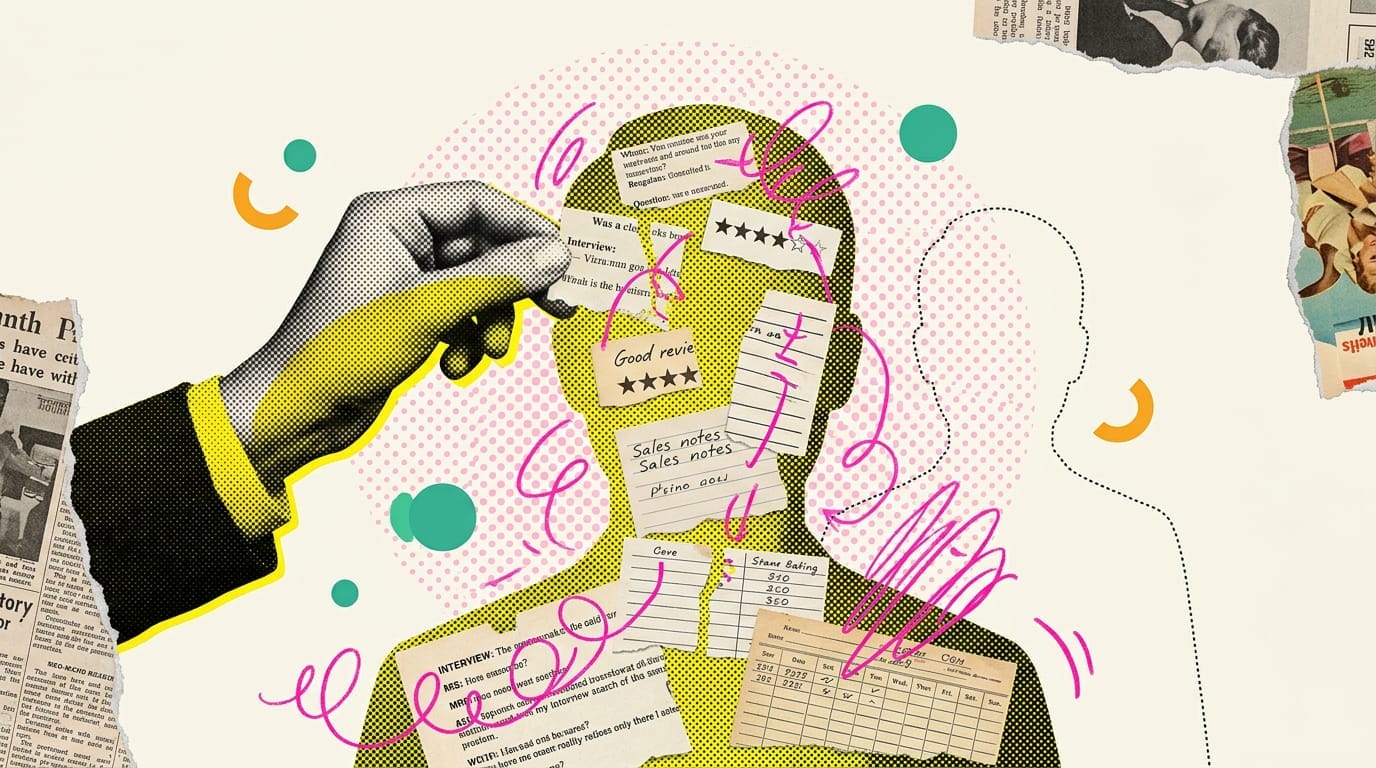
Ask ChatGPT to “create a buyer persona for my window and door company” and ten seconds later you’ve got Marco, 47, a quality-conscious building contractor who wants a reliable supplier and hates delays. He sounds believable. The trouble is that the AI wrote Marco without reading a single one of the quotes you lost. It stitched together the average customer of any company at all, and the only way to sell to an average customer is with average messaging.
The method that works starts from a different place. You hand the AI your own data (interviews, reviews, CRM notes) and ask it to summarize, count and quote. The guide on buyer personas with ChatGPT has three short prompts to get you started. This article has the extended versions, plus a list of inputs to prepare, an output format you can check, and the checks to run before you use the persona to write a landing page or a content plan.
When AI helps and when it makes things up
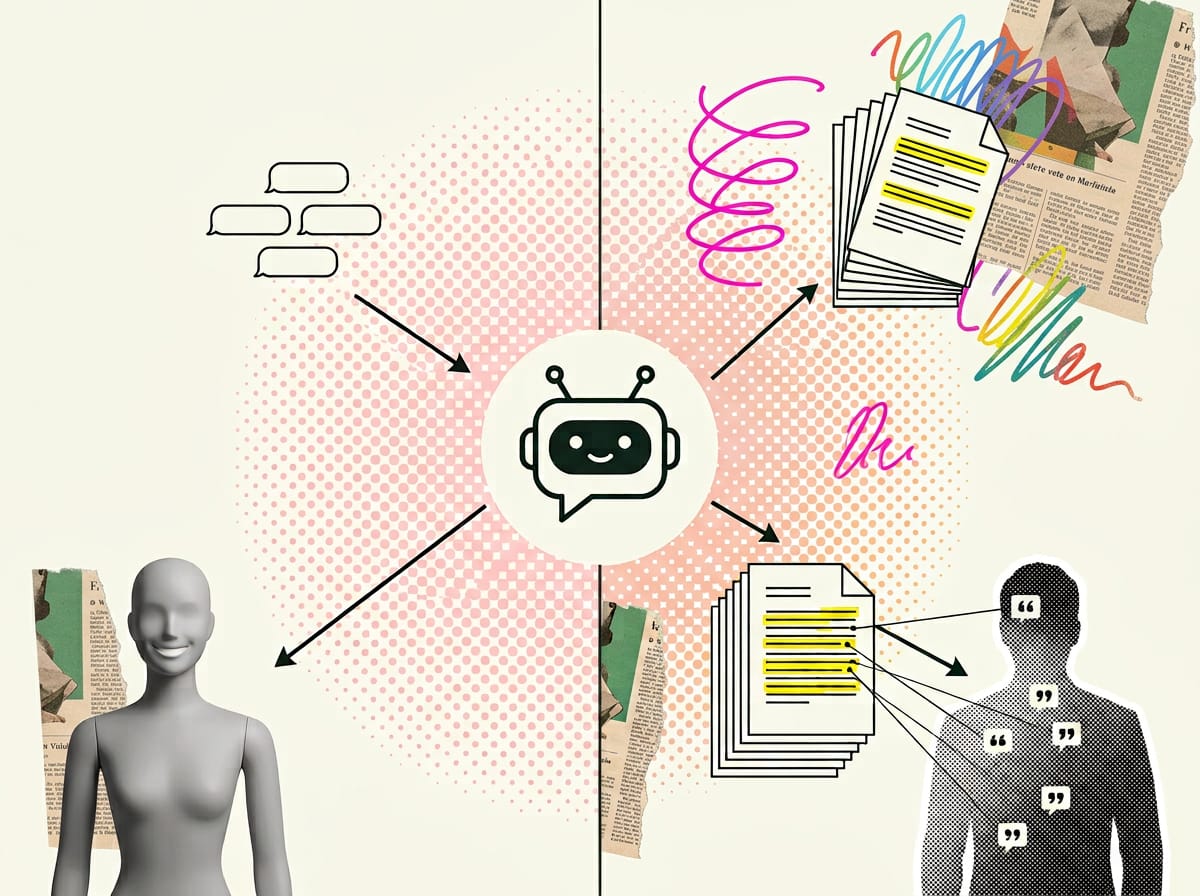
ChatGPT is a chatbot from OpenAI, launched in November 2022, that uses large language models to understand and generate text1. It produces the most plausible continuation of whatever you type. Give it nothing but “windows and doors, small business, Italy” and the most plausible answer is a stereotype. Give it eight interview transcripts and the most plausible answer is a summary of those eight interviews. Same model, completely different result.
Academic research on data-driven personas has been saying this for years, since well before chatbots arrived. A review of 77 studies published between 2005 and 2020 identifies five gaps that are still open. Two of them are the lack of methods for evaluating personas and the risk of losing the deeper user insights when you automate2.
A recent Italian example shows a sensible way to split the work. In 2026, two researchers at the Bank of Italy grouped Italian consumers by their payment habits. First they defined five behavioral profiles by hand. Then they assigned respondents from the Eurosystem’s SPACE 2024 survey to those profiles, using a mix of human judgment, LLMs and supervised learning algorithms3. Among the findings: 24% of consumers don’t use cash, and 15% are well integrated into the digital economy.
The takeaway for your business is practical. You decide what question the persona has to answer and which data backs it up. The AI reads, counts and sorts. You check.
What to prepare before you open ChatGPT
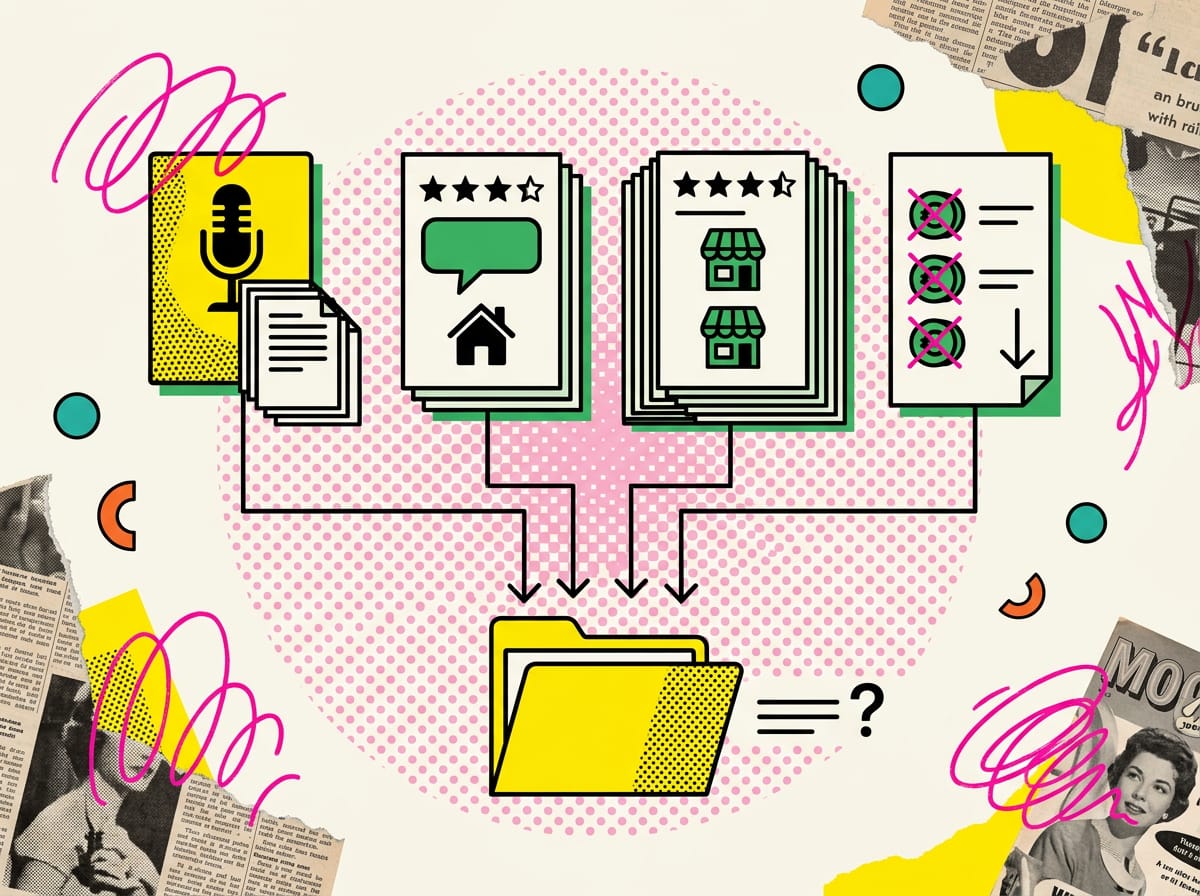
Almost everyone skips this step, and it’s the one that decides how good the output is. Before you write a single prompt, you need a folder with four kinds of material.
| Input | Minimum amount | Format | Where to find it |
|---|---|---|---|
| Customer interview transcripts | 6-8 | Text, one file per interview, IDs like INT-01 | Call recordings, transcribed with whatever tool you use for meetings |
| Your reviews | 20-40 | Spreadsheet with date, source, rating, text | Google Business Profile, marketplaces, industry portals |
| Competitor reviews | 30-50 | Same format, plus a “competitor” column | Google Maps listings and public portals for your 3 closest competitors |
| Notes on lost quotes | 10-15 | One row per deal with the stated reason | CRM or sales spreadsheet |
Competitor reviews are cheap and anyone can get them. If you win twenty customers a year, you won’t have many reviews of your own. The three competitors in your area might have two hundred between them, and in there you’ll find the complaints your service answers, spelled out in plain language.
Two formatting rules. First, anonymize the transcripts before you upload them: strip out names, company names, phone numbers and identifiable amounts, and put the ID in their place. Then add three lines of context at the top of each file (the customer’s industry, size, and how the deal ended). Without those lines the AI can’t tell a customer with €400,000 in revenue from one with €8 million, and it blends them into the same persona.
Write down the business question too, in one sentence. For example: “why do technical managers at construction firms choose a window and door supplier for renovation projects?” A study on segmentation in the hotel industry reached the same conclusion. There, the marketing department set the question that drove the clustering algorithm, because it needed results it could understand and act on4. The question is what defines which data counts as relevant.
Prompt 1: synthesizing 8 interviews with frequencies and quotes
The first prompt turns your interviews into a persona where every claim comes with evidence. Use it inside a ChatGPT or Claude project where you’ve uploaded the transcripts as separate files.
Role: you are a qualitative research analyst. You work ONLY on the attached files.

Context: small business that makes [product/service]. Business question:
"[your sentence]". Attached are 8 anonymized transcripts, IDs INT-01 to INT-08.

Task:
1. Read all the transcripts and code the themes into 5 categories:
   goals, problems, selection criteria, fears, buying triggers.
2. For each theme, state how many interviews it appears in (e.g. 5/8).
3. For each theme, give ONE verbatim quote, in quotation marks, with its ID.
4. Flag as "weak signal" any theme that appears in fewer than 3 interviews.
5. List contradictions separately (interviews that say opposite things
   about the same theme), with the IDs involved.

Constraints:
- Do not invent name, age, gender or hobbies. If a field doesn't come up
  in the texts, write "not found".
- Do not paraphrase inside quotation marks. If you can't find an exact
  sentence, leave the cell empty.
- If the data points to two different profiles, say so and keep them separate.

Output: table with columns Category | Theme | Frequency | Quote | ID.
Below the table, a persona summary of no more than 120 words.
Step 5 is the one that matters most. If three customers say price was the deciding factor and three others say they paid more to get installation included, an averaged-out persona who “values quality for money” wipes out exactly the information you need. A contradiction often means you’re looking at two separate personas, and you’re better off keeping them apart.
The rule against demographic details is there because name and age are exactly what make an invented persona feel real.
Prompt 2: your reviews and your competitors’
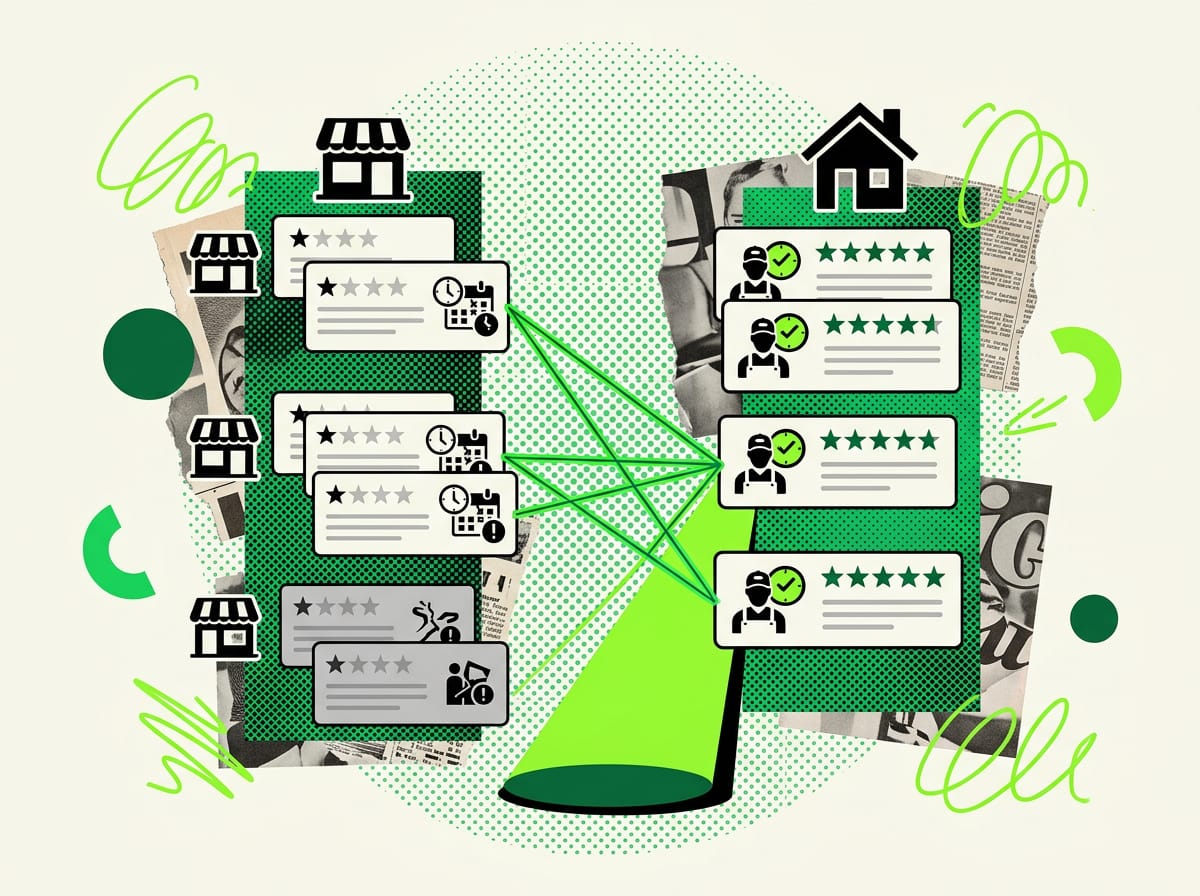
Reviews have one advantage over interviews. Customers write them without you asking anything, so you can’t steer the answers. They also have a weakness: the people who bother to write them are mostly the very happy and the very angry. The prompt allows for both.
Attached is a spreadsheet with [N] reviews: columns date, source, company
(us / competitor A / B / C), rating, text.

1. Group the complaints in the COMPETITORS' 1-3 star reviews into
   no more than 8 recurring problems. For each: number of reviews,
   competitors involved, one verbatim quote with its date.
2. Do the same with the praise in OUR 4-5 star reviews.
3. Cross-reference the two lists: which competitor problems match
   one of our strengths mentioned by customers? Which competitor
   problems don't we solve either?
4. Exclude reviews older than 24 months and tell me how many you excluded.

Do not add problems that don't appear in the text.
For a window and door company, the output might show that plenty of competitors’ negative reviews mention site visits being pushed back, and that several of your positive reviews praise the technician for showing up on time. That’s the promise for your landing page headline, written in your customers’ own words.
Prompt 3: objections as hypotheses to test
Here the AI really is generating something new, and you should be upfront about that. Starting from the persona from prompt 1 and your notes on lost quotes, you ask it to guess at objections your salesperson hasn’t heard yet. Whatever it comes up with stays a hypothesis until someone confirms it.
Use the persona and the attached notes on 12 lost quotes.

1. List the objections that appear in the notes, with frequency.
2. Suggest up to 5 PLAUSIBLE objections that don't appear in the notes.
   Label them "HYPOTHESIS".
3. For each hypothesis, write the exact question the salesperson can ask
   the next prospect to confirm or rule it out, without leading
   them to the answer.
The hypotheses go to your salesperson as a checklist for the next ten deals. If an objection comes up at least three times, it goes into the persona. If it doesn’t, delete it.
Prompt 4: stress-testing the persona
The last prompt asks the AI to tear apart the persona it just wrote. Start a fresh conversation so the model isn’t defending its own earlier work.
Attached are a buyer persona and the data it was built from.
Act as a skeptical reviewer.

1. Point out every claim in the persona that is NOT backed by at least
   one quote in the data.
2. Point out themes in the data that the persona ignored.
3. Tell me which claims would apply to any customer in any industry
   (e.g. "wants to save time") and are therefore useless for decisions.
4. Assess whether the data is enough: how many more interviews would
   it take to change your verdict?
Step 3 cuts the lines that would fit any persona at all. “Looks for reliability” is as true of a plumber’s customers as of a law firm’s. Leave it in and no copywriter will know what to do with it.
How do you check the output in 30 minutes?
Print the table from prompt 1 and spot-check at least ten quotes by searching for them with Ctrl+F in the original transcripts. If even one quote doesn’t exist or has been reworded, rerun the prompt and tell it not to paraphrase. Then pick two themes at random and check that the frequencies add up. All it takes is half an hour and someone on the team who didn’t write the prompt.
This check fills one of the gaps flagged by the review of data-driven personas: the lack of evaluation methods2. At a small business, the evaluation method comes down to one rule. Every line of the persona has to trace back to a file and a sentence, and any line that can’t gets cut.
The second check is for your salesperson. Have them read the 120-word summary and name two real customers who fit it. If they can’t, the persona describes someone who doesn’t buy from you.
From B2C to B2B: what changes in the prompts
When you sell B2B, there are usually at least two people on the other side of the table: the one who uses the product and the one who signs off. The owner of the construction firm looks at price and payment terms. The site foreman looks at installation times and how defects get dealt with.
So in prompts 1 and 3, add this line: “Separate claims by role (user, decision-maker, influencer). If an interview doesn’t make the role clear, flag it.” And in the three context lines at the top of each transcript, include the interviewee’s role. Without it, the AI merges the two into a hybrid figure who doesn’t exist at any company.
There’s a second adjustment. B2B customers change over time: they grow, they get a new purchasing manager, they move into another segment. The hotel industry study saw the same thing in guest profiles, which change and can shift from one cluster to another4. Rerun the workflow every 12 months, or whenever the main reason for lost quotes changes three quarters in a row.
The full workflow in one morning
Laid out step by step, the process becomes a standard operating procedure (SOP) you can hand off to someone on your team.
- Write the business question in one sentence (10 minutes, owner or marketing lead).
- Collect and anonymize interviews, reviews and CRM notes (2 hours, team member).
- Run prompt 1 in a ChatGPT or Claude project with the files uploaded (15 minutes).
- Run prompt 2 on the review spreadsheet (15 minutes).
- Spot-check the quotes (30 minutes, someone other than whoever ran the prompts).
- Run prompt 3 and pass the hypotheses to sales (15 minutes).
- Run prompt 4 in a new conversation and fix the persona (20 minutes).
- Copy the results into the template for your AI output and share it with whoever writes your content and landing pages.
If you’re short on raw material, meaning fewer than six interviews, start there. The interview questions and the method for pulling data from interviews and your CRM exist to fill that folder before you open the chatbot. If you’re weighing up dedicated software instead, the comparison of buyer persona tools will help you work out when a tool is worth paying for and when a spreadsheet and a good prompt will do the job.
One study on data-driven personas suggests using the persona profile as a window onto the data behind it, so anyone reading it can always trace a claim back to the numbers5. At a small business you get there with a table of frequencies and quotes, a human check, and the discipline to keep it up to date. Do that, and the persona you write is one of your real customers, with their words and their doubts. ChatGPT’s 47-year-old Marco can stay in the chat.
Sources
Footnotes
-
ChatGPT — Wikipedia. it.wikipedia.org ↩
-
A Survey of 15 Years of Data-Driven Persona Development. tandfonline.com ↩ ↩2
-
N. 95 - Come paghi? Profilazione dei consumatori tramite diari di pagamento e Intelligenza Artificiale. bancaditalia.it ↩
-
Data-driven market segmentation in hospitality using unsupervised machine learning. sciencedirect.com ↩ ↩2
-
Data-Driven Personas for Enhanced User Understanding: Combining Empathy with Rationality for Better Insights to Analytics. sciencedirect.com ↩
FAQ
Can I ask ChatGPT to create my company's buyer persona without giving it any data?
You can, but you'll get a plausible stereotype, not your actual customer. ChatGPT predicts the most likely continuation of what you type, so without data it describes the average customer of any company. And an average customer only gets you average messaging.
What data do I need to generate a buyer persona with AI?
You need a folder of real customer material: interview transcripts, reviews and CRM notes. For interviews, aim for at least 6-8 transcripts, one per file, each with an ID like INT-01 so the AI can cite them.
Why can AI-generated buyer personas be unreliable?
Automation can miss the deeper insights about users, and there are no established methods for evaluating personas yet. A review of 77 studies published between 2005 and 2020 recommends checking first that you have enough data.
How should work be split between the business owner and the AI when building personas?
You decide which question the persona has to answer and which data backs it up. The AI reads, counts and sorts the material. Then you check the output before using it for a landing page or a content plan.
Is it better to segment customers using data alone or define segments by hand?
Combine the two. Purely data-driven segmentation can produce groups that don't matter for the decision you need to make, while a purely theoretical one may not hold up against the data. Two Bank of Italy researchers took this approach, pairing hand-defined profiles with LLMs and supervised algorithms.