What Is a Landing Page? Definition, Types and When You Need One
What is a landing page? A single page with one goal: converting visitors from an ad. See the types, how it differs from a website, and when you need one.

An ad agency told you “you need a landing page.” You pointed the campaign at your homepage anyway, and a month later the report shows plenty of clicks and almost no leads. Nine times out of ten, the problem is the page people land on. The ad budget is rarely to blame. The research here is blunt: well-built landing pages convert close to 50% of visitors, while poorly built ones stall at around 5%.1 Same ad spend, ten times the results. Before you put another euro into ads, it pays to know exactly what you’re buying.
What a landing page is, in plain English
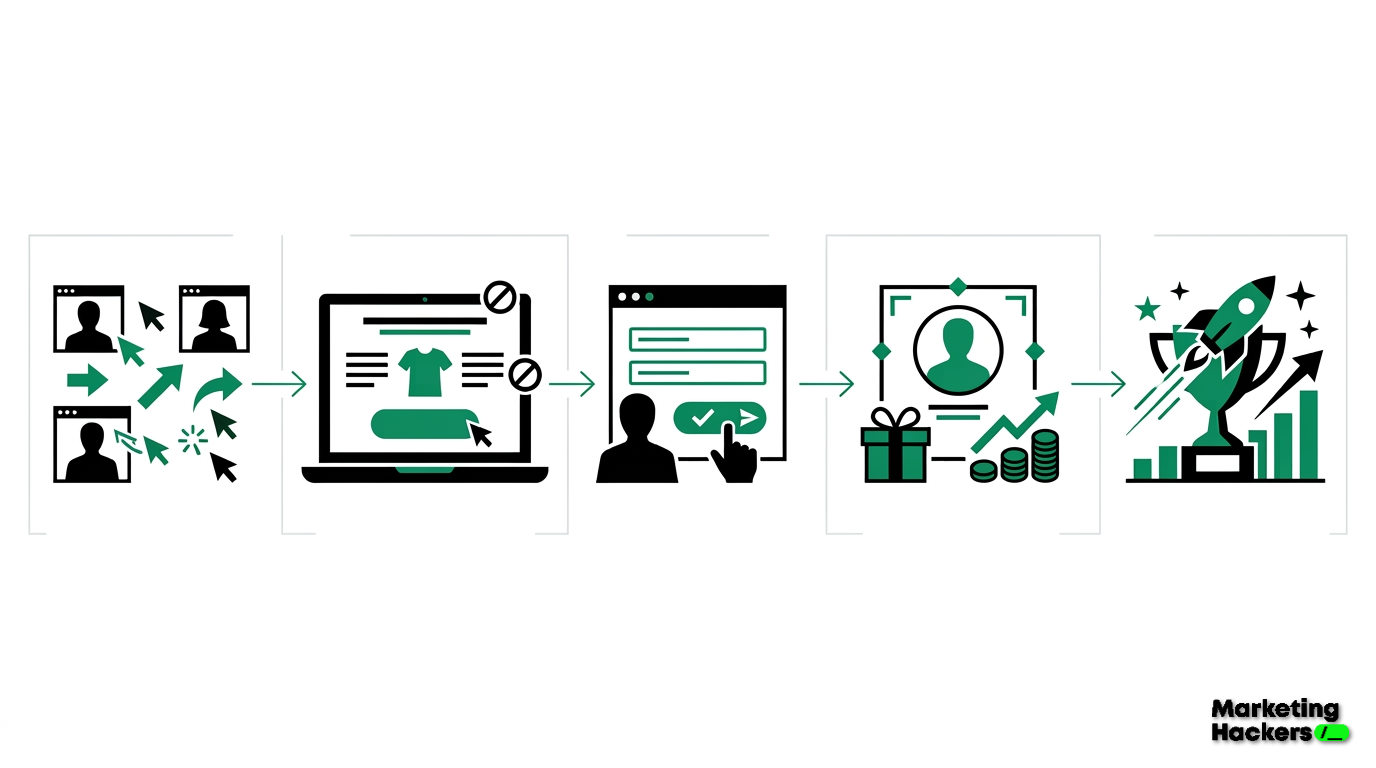
A landing page is a single web page built around one goal: getting the visitor to take one specific action, such as leaving an email, booking a call or buying a product. The academic literature describes it as the page that appears in response to an ad, where users land after clicking, with an exact description of a product, service or brand.1
The name says it all. It’s where traffic lands, whether it comes from a Google ad, a social post, a newsletter or a QR code on a flyer. On any other page of your site, elements compete for attention. Here, every element works toward a single conversion. No menu with twenty links, no distractions, no side routes. One message, one promise, one action.
So when someone says “landing page,” they mean a page with one job, measured by one number: how many visitors out of a hundred did what you wanted. Keep that definition in mind and you’ll avoid the most common and most expensive mistake, which is sending paid traffic to a page built to inform rather than convert.
What’s the difference between a website and a landing page?

Your website introduces you and answers lots of different questions: who you are, what you do, where you are, how to reach you. A landing page exists to get one answer from an audience an ad has already warmed up. Think of the website as a department store. The landing page is a single counter with one product and a till.
You see the difference in how people behave. On your homepage, visitors wander. They scan the menu, open the About page, hit back, and often leave. On a well-built landing page there’s only one path forward. That matters because, as the research shows, the page’s job is to keep the number of visitors who leave without doing anything as low as possible.1 Every extra link to the rest of your site is another exit.
A landing page doesn’t have to live inside your website, either. It can stand alone on its own domain or subdomain, with none of the main site’s header or footer. That’s where the website-versus-landing-page question really gets decided, element by element.
The types of landing page you’ll actually come across

Landing page types get confusing fast because every vendor uses different names. In practice you’ll use four, and what separates them is what you ask the visitor to give you.
| Type | What it asks of the visitor | When to use it |
|---|---|---|
| Squeeze page | Just an email, in exchange for something (a guide, a discount, a checklist) | Building a contact list you’ll nurture over time |
| Lead capture | More details (name, phone, company, needs) | Generating qualified enquiries for sales or a quote |
| Click-through | No details, just a click to the next step | Warming visitors up before sending them to checkout or booking |
| Sales page | The purchase itself | Selling a product or service straight from the page |
What changes is friction. A squeeze page asks for very little and converts in volume, but the contacts are cold. A lead capture page asks for more and converts a lower percentage, but the people it brings in are closer to buying. Your choice depends on how warm the traffic is and how much each individual lead is worth to you. A small business selling a €30,000 system would rather have ten qualified leads than a thousand random emails. An online shop selling €40 products wants the opposite.
When you need a landing page, and when you’re wasting budget
You need a landing page any time you’re paying to drive traffic toward one specific action. A Google Ads campaign on a commercial keyword, a sponsored Meta post promoting an offer, an email to your customer list with a seasonal promotion. In every one of these cases, sending people to the homepage throws away part of the spend, because the homepage isn’t built to close.
Sometimes, though, a landing page adds nothing. If the traffic is organic and informational (someone searches “how to clean a boiler” and lands on your blog), pushing them into a conversion page just drives them off. If you don’t have a clear offer to put front and centre, no landing page will invent one for you. And if you lack the time or tools to measure how many people convert, you’re building blind, because a landing page is only worth the number it produces.
Here’s a quick test before you decide. Write down, in one sentence, the single action you want from people who click. If you can, you need a landing page. If the sentence has three “and thens” in it, sort out the offer first.
What makes a landing page convert
This is where it gets interesting, and for once there’s real data. A study published in 2025 in Applied Marketing Analytics analysed 25,027 real landing pages, using an automated model to isolate the factors that genuinely move conversion rates.2 These were measured across tens of thousands of pages.
The factors with a proven effect are concrete, and you can apply them yourself: page height, how much space images take up, whether there’s a video, text length, the number and placement of buttons, how forms are designed, and whether there’s a promotional countdown timer.2 Another study puts numbers on how much visual elements influence the call to action. Colour accounts for about 31.6%, images for 26.3%, and graphic themes and animated ads for around 15.8% each.1
Then there’s a factor almost nobody thinks about: readability. A study using a dataset of landing pages and their conversions found that text readability on its own can predict conversion rate, so much so that the authors built five machine learning models around the idea.3 The same study notes that around 60% of purchases are made by non-registered users, people landing for the first time.3 In other words, whoever reads your landing page probably doesn’t know you yet, and if the copy is hard going, they leave.
This is where AI saves you hours, as long as it sits inside a sound process. Decide the goal, the audience and the offer first, then use AI to draft and tighten the copy. Here’s a prompt that works with ChatGPT or Claude:
“Act as a direct response copywriter. I have a landing page for [product/service] aimed at [audience: e.g. owners of car repair garages in the Midlands]. The single action is [e.g. booking a demo]. Write 3 headline variations, one subheadline, 3 bullets with concrete benefits and 1 line of button text. Use short sentences, an eighth-grade reading level and zero jargon, and make every sentence push toward the action. Then give me the Flesch Reading Ease score for each headline.”
The readability score at the end gives you an objective check that lines up with what the research says. The weighting of elements and the order of sections then shape the structure of a landing page that converts.
How much does a landing page cost, and should you build it yourself?
The question always comes up, and the honest answer is that cost depends on three things: who writes the copy, who handles the design, and who puts it live and measures it. Self-serve builders start at a few tens of euros a month and you do the work. A provider who hands you finished copy, design and tracking costs more, but takes the hands-on work off your plate.
The number that really matters is the cost of a page that doesn’t convert. If you’re about to invest in advertising, the gap between a landing page at 5% and one at 50% is worth far more than any agency quote.1 Doing it yourself makes sense if you have the time, a feel for copy and the patience to test and measure. Outsourcing makes sense once the traffic you’re sending to it costs more than the page itself.
If you’d rather start from a setup already built around the factors that matter, the Marketing Hackers design team builds landing pages inside a measurement process, so you can see your conversion rate from day one. If you’d rather roll up your sleeves, you can build it yourself by learning how to create a landing page from scratch. Persuasive copywriting, decision psychology and advanced prompts matter most if you sell online, with an effective AI-built e-commerce landing page.
Sources
Further reading
- Websites and landing pages for small businesses: the complete guide
- Business websites for SMEs: speed, hosting and visibility on Google
Footnotes
FAQ
What's the difference between a website and a landing page?
A website introduces your business and answers many different questions: who you are, what you do, how to reach you. A landing page is after one answer from an audience an ad has already warmed up. A website is a store with many aisles. A landing page is a single counter with one product and a checkout.
Why does my campaign get clicks but so few leads?
The problem is rarely your ad spend. It's usually the page people land on after they click. Sending ads to your homepage, which was built to inform rather than convert, scatters visitors across menus and side paths. You need a page with one goal.
What conversion rate can a well-built landing page reach?
A well-built landing page can convert close to 50% of visitors, while a poorly built one stalls around 5%. With the same ad budget, that's up to a tenfold difference in results.
What types of landing pages are there?
Vendors use plenty of different names, but you'll really only use four types, and they differ based on what you ask visitors to do. A squeeze page, for example, asks only for an email address in exchange for something like a guide, a discount or a checklist, and it's used to build a list of leads to nurture.
Does a landing page have to live on my website?
No. A landing page can stand on its own, on a dedicated domain or subdomain, without your main site's header and footer. That removes distractions and the exits that lead visitors away to the rest of your site.
Why is it called a landing page?
It's the page where visitors "land" after clicking a Google ad, a social media post, a newsletter link or a QR code on a flyer. Once they're there, there's only one path in front of them.